
Ashley Colpaart
I spend a lot of time talking with shared kitchen operators, food entrepreneurs, economic developers, and partners who all feel the same thing in their bones:
Something fundamental is shifting in food.
Not a trend. Not a cycle. A structural change.
Over the next 20 years, demographic forces in Western countries will reshape how food is produced, who produces it, and what “success” in food even looks like. And if you work anywhere near food entrepreneurship, shared kitchens, or small-scale food manufacturing, this isn’t abstract—it’s your world.
Here’s my take on where we are headed, and why I believe shared kitchens are and will continue to be essential infrastructure for the future of food.
Fewer People, Older People, and Smaller Households
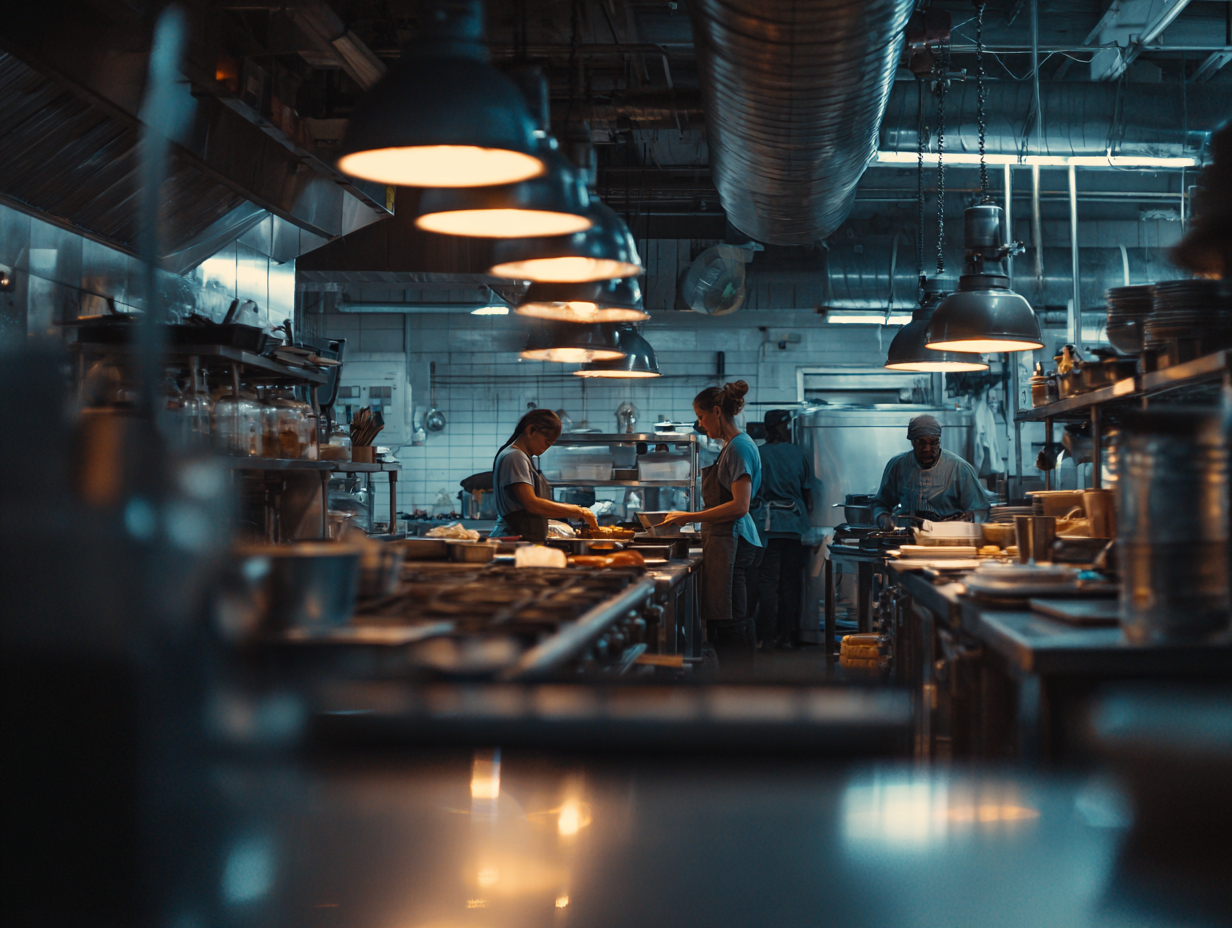
Across Western countries, population growth is quietly slowing. Fewer babies are being born. Families are smaller. And many adults- by choice or circumstance- are living alone for larger portions of their lives.
At first glance, these may feel like abstract demographic trends. But together, they’re reshaping food demand at a foundational level.
The modern food system was built for a very specific household: a family of four, eating three predictable meals a day, buying in bulk, and cooking at home on a fairly regular schedule. That household is no longer the norm.
Today’s reality looks very different. It’s a single professional cooking for one. A couple whose kids have moved out. An older adult prioritizing energy, mobility, and ease over novelty or volume. These households don’t need more food—they need different food.
As a result, demand is shifting away from rigid formats and one-size-fits-all packaging and toward offerings that reflect how people actually live now:
- Smaller portions that reduce waste and feel right-sized
- More frequent, flexible eating occasions instead of three fixed meals
- Food that supports health, independence, and longevity, not just fullness
- And meals that are still joyful and comforting, even when they’re designed for convenience or care
This isn’t a downgrade in how we eat—it’s a recalibration. People still want pleasure, ritual, and connection through food. But they want it in forms that fit smaller households, longer lives, and more fluid daily rhythms.
For food businesses, shared kitchens, and local producers, this shift isn’t a constraint. It’s an invitation to rethink who we’re feeding—and to design food that meets people where they are now.
Fewer “Restaurant Dreams,” More Food Income Strategies
Another shift is already well underway—one that’s harder to spot, but impossible to ignore once you see it. Fewer people are chasing the classic food entrepreneur storyline: the full-service restaurant, the rapid expansion, the nationally scalable CPG brand.
Not because they don’t love food.
And not because they lack ambition.
They’re simply clear-eyed about the math. Watch any CPG food company on Shark Tank, and you know exactly what I’m talking about.
Opening a traditional restaurant or launching a scalable packaged food brand now requires:
- Significant upfront capital, often before revenue is predictable
- Labor models that are increasingly fragile, expensive, or unavailable
- Margins so thin that one bad month can undo years of effort
- Operational and personal risk that no longer pencils for most people
For many would-be founders, that’s not a lack of courage—it’s a rational assessment.
So instead of betting everything on a single, high-stakes outcome, more people are using food in smarter, more flexible ways. Food becomes:
- Supplemental income layered onto an existing career
- A second act after burnout in another industry
- A post-retirement business that offers purpose without physical overload
- A culturally rooted offering serving a specific community, not a mass market
- A way to monetize deep expertise without putting personal savings or family stability at risk
This shift fundamentally changes the role of shared kitchens, food incubators, and food accelerators.
We are no longer just a stepping stone on the way to brick-and-mortar restaurants, ghost kitchens, or national retail shelves.
In many cases, we are the destination.
Success is no longer defined by “graduating” out of a shared kitchen. It’s defined by whether someone can build a livelihood that actually fits their life—financially, physically, and emotionally.
That is a healthier definition of entrepreneurship.
And it aligns exactly with where demographics—and the food system itself—are headed.
Cultural Diversity Isn’t a Trend. It’s the Baseline.
In much of the Western world, cultural diversity is often discussed as if it were a trend—something new, optional, or subject to reversal. But on the ground, in neighborhoods and kitchens, the reality is already clear.
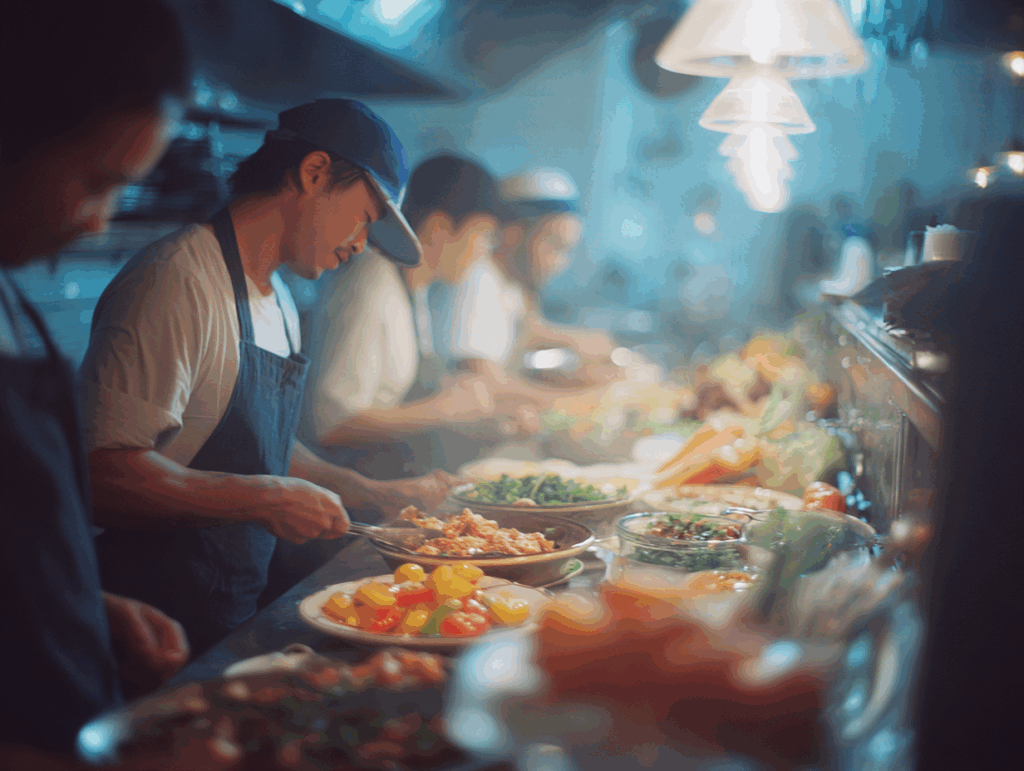
Migration continues to shape how people live, work, and eat—regardless of policy swings or political cycles. The result is a food landscape that is more localized, more diverse, and more neighborhood-specific than at any point in recent history.
There is no longer a single “mainstream palate.”
Instead, demand fragments along many lines:
- Culture and heritage
- Health needs and dietary requirements
- Lifestyle choices and values
- Geography, even down to the block or building
What sells in one neighborhood may be irrelevant two miles away. And that fragmentation isn’t a weakness of the food system—it’s a signal that people want food that reflects who they are and where they live.
For food entrepreneurs who are deeply connected to their communities, this creates enormous opportunity. Cultural fluency becomes a competitive advantage. Authenticity matters. Specificity wins.
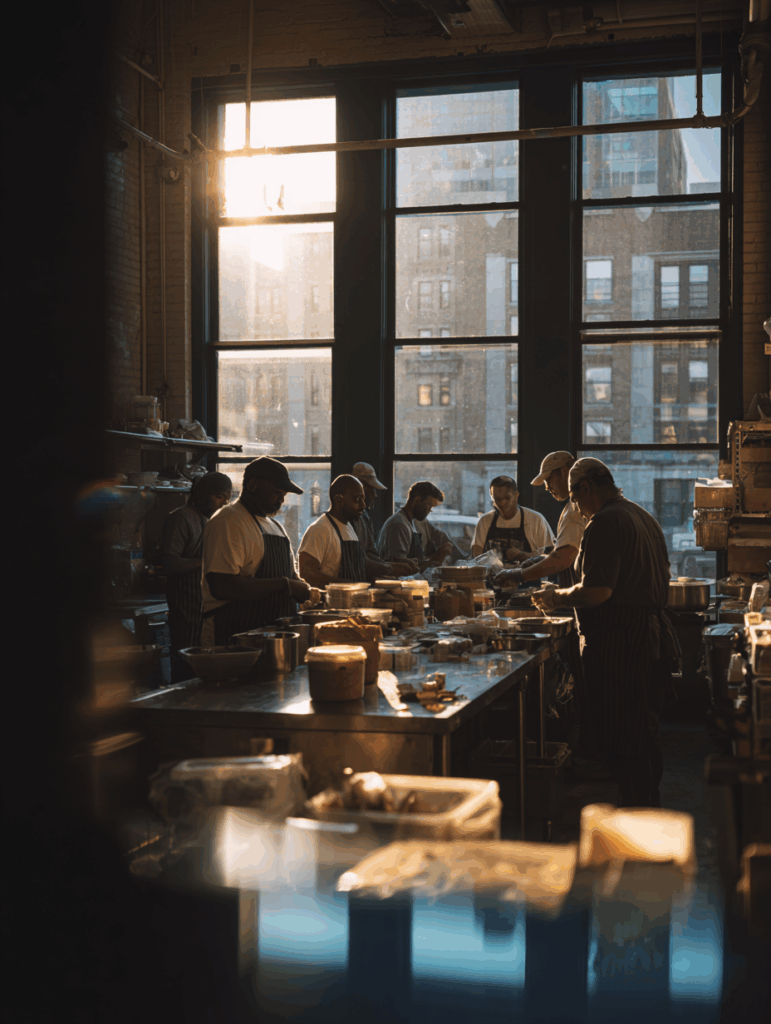
But for shared kitchens, this same reality introduces real operational complexity:
- More cuisines using different equipment, ingredients, and workflows
- More compliance scenarios across health codes, certifications, and labeling norms
- More irregular schedules driven by cultural rhythms, religious calendars, and community events
- More varied production needs, from small-batch to seasonal to made-to-order
This kind of complexity does not scale with ad-hoc processes or informal coordination. It requires infrastructure that is intentional, flexible, and fair.
What shared kitchens provide—when they are run well—is structure without rigidity. Clear procedures. Predictable access. Consistent food safety standards. And systems that allow many different businesses to operate side by side without friction or favoritism.
That’s not overhead.
That’s value.
And in an increasingly diverse food economy, it’s not optional—it’s foundational.
Aging Populations Mean Food as Care, Not Just Consumption
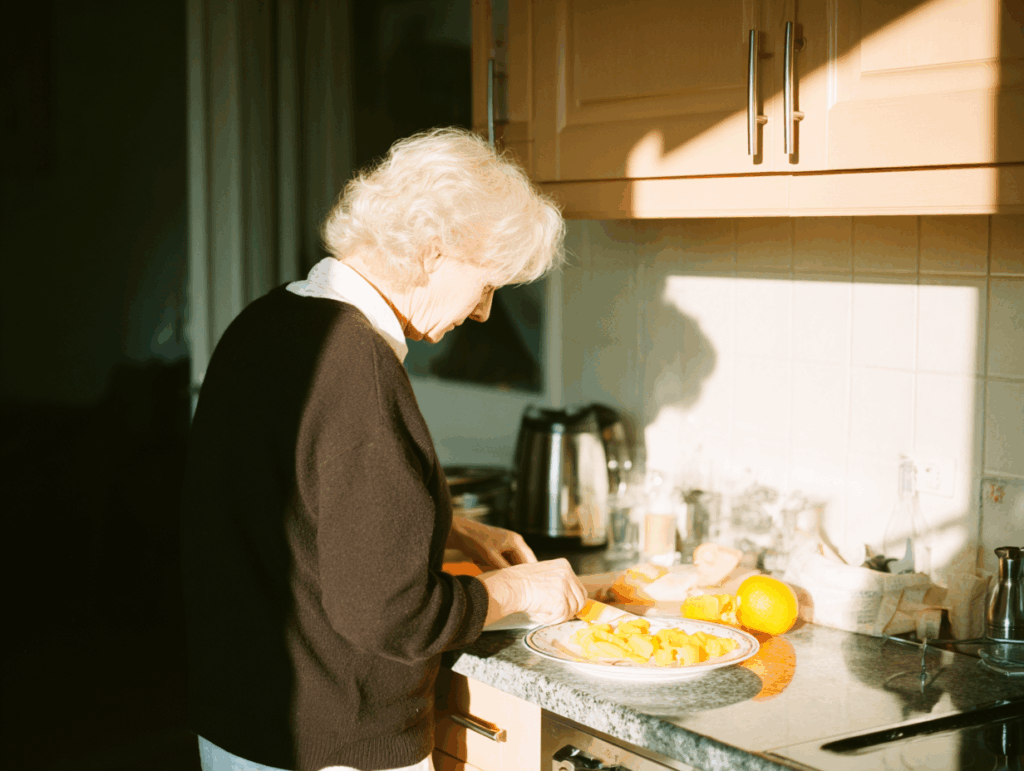
An aging population doesn’t just eat differently. It eats with intention.
As people age, food becomes less about novelty and more about energy, dignity, and independence. Meals are no longer just consumed—they are part of care. They’re about staying strong, staying connected, and staying at home for as long as possible.
I saw this firsthand early in my career, working at Meals on Wheels—one of the most quietly innovative food organizations in the country. Long before “food is medicine” entered the mainstream conversation, Meals on Wheels was already delivering it. Not just calories, but thoughtfully designed meals tailored for older adults and people who are homebound. Lower sodium. Higher protein. Texture-modified when needed. Culturally familiar when possible. Always delivered with consistency—and often with a human check-in that mattered just as much as the food.
Founded during World War II to support families whose breadwinners were away, Meals on Wheels evolved into a nationwide model of food as social and civic infrastructure. It solved problems at the intersection of nutrition, healthcare, and community long before those systems knew how to talk to one another.
Today, we’re seeing sustained growth in exactly this kind of food:
- Protein-forward meals that support mobility and strength
- Lower-sodium comfort foods that protect health without sacrificing joy
- Texture-modified offerings that make eating safer and more accessible
- Culturally familiar foods, adapted for changing dietary needs
Much of this food is produced locally, in smaller volumes, often for community programs, care organizations, or direct-to-consumer distribution. And increasingly, shared kitchens are supporting businesses that operate at the intersection of:
- Food
- Health
- Community care
This isn’t a niche market. It’s civic infrastructure.
What’s interesting now is the opportunity to reimagine what this model could look like in the future. What if supporting older adults with meals were as easy as donating DoorDash credits specifically for seniors?
What if there were an app that let you send a hot, home-style meal—or even a shared hotplate—to an elderly neighbor the same way you might send flowers or a card?
These aren’t radical ideas. They’re modern extensions of a proven model—using today’s tools to scale the same values: dignity, nourishment, and connection.
And just like Meals on Wheels has shown for decades, this kind of work doesn’t succeed on improvisation. It depends on trust, reliability, and operational clarity. Systems that work every day, not just when conditions are ideal.
In this context, consistency isn’t boring. It’s care.
Labor Will Stay Tight. Ease Will Matter More.
One of the least discussed demographic realities is also one of the most consequential: there simply won’t be enough labor to support food models built on complexity, constant oversight, and manual coordination.
This isn’t a temporary shortage. It’s a structural shift.
The future food entrepreneur increasingly looks like:
- A solo operator, not a staffed team
- A part-time producer, fitting food work around other income
- Someone producing at unconventional hours, because that’s when time is available
- A caregiver, an older adult, or someone managing health constraints alongside their business
These operators don’t fail because they lack skill or commitment. They fail when systems assume they have unlimited time, energy, or administrative capacity.
For shared kitchens, the implication is direct and unavoidable.
If it’s hard to access your kitchen, hard to book time, hard to understand expectations, or hard to operate independently, these entrepreneurs won’t push through the friction. They’ll go elsewhere—or they’ll stop producing altogether.
The kitchens that thrive in this environment are not the ones that work harder. They’re the ones that work simpler.
They:
- Reduce friction in scheduling and access
- Standardize commercial kitchen procedures so expectations are clear and fair
- Provide real clarity around safety, compliance, and accountability
- Enable operators to self-serve, without needing constant staff mediation
- Connect entrepreneurs with ecosystem services and opportunities
This is where modern shared kitchen systems matter. Tools that make operations predictable and transparent don’t remove the human element—they protect it. They free kitchen staff to focus on education, community-building, and operator success instead of endless coordination, reminders, and exception-handling.
This is where modern shared kitchen management platforms like The Food Corridor come in — helping operators simplify scheduling, support compliance, and create an experience that makes it easier for food entrepreneurs to succeed.
Ease is not a luxury feature.
It’s an operating strategy.
When labor is tight—and it will be—systems that respect people’s time, capacity, and realities are the ones that keep kitchens full, businesses viable, and communities fed.
The Real Shift: Shared Kitchens as the Destination
Here’s the part that often goes unsaid:
For many food businesses today, owning a larger private kitchen, opening a restaurant, or scaling into national distribution is no longer the goal.
And that’s not a failure of ambition.
It’s a rational response to reality.
Smaller households.
Localized demand.
Health-driven food choices.
Capital constraints.
And a growing desire for work that is sustainable—not just financially, but physically and emotionally.
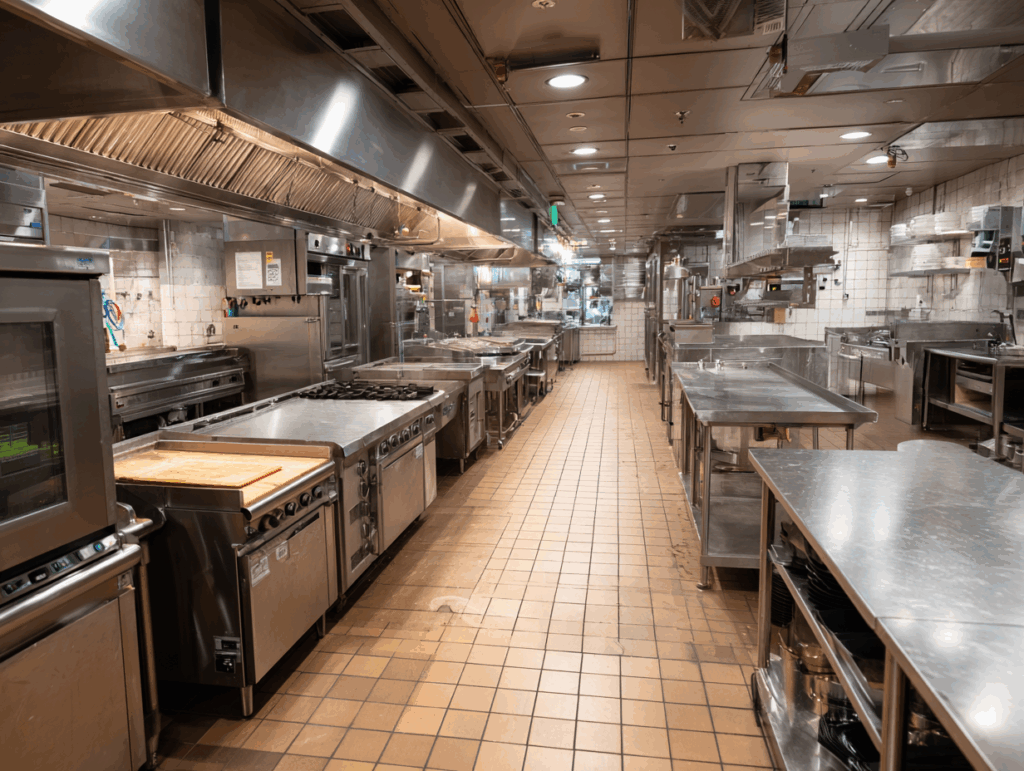
In this context, shared kitchens are no longer “what you use until you can afford something else.” They are the right-sized infrastructure for a food system built around smaller batches, local production, and human-scaled businesses.
Many entrepreneurs transition into shared kitchens by searching for available commercial and shared kitchen space in their communities. List your kitchen today on The Kitchen Door, ranked #1 on Google for searches like “find a shared kitchen near me”.
This reframes the questions kitchen operators and ecosystem builders are asking. It’s no longer just how do we help businesses graduate out? It’s:
- How do we design kitchens that are adaptable instead of rigid?
- How do we build resilience into daily operations, not just growth plans?
- How do we align infrastructure with real demand—not legacy assumptions?
Whether you’re setting up a commercial kitchen, rethinking layout plans, or revising kitchen blueprints, the future-oriented question is the same: how do we support many viable businesses, not a few high-risk ones?
And this shift isn’t something coming decades from now. It’s already underway.
Single-person households continue to rise.
Demand for health-aligned, ready-to-eat food keeps growing.
More people are entering food entrepreneurship later in life, or alongside caregiving, health needs, and other work.
Shared kitchens built for this reality aren’t behind the curve—they’re early.
Early to:
- Attract the next generation of food businesses
- Function as true food incubators and accelerators
- Support entrepreneurs who value sustainability over scale
- Anchor local food economies that are smaller, more diverse, and more human
- Build an ecosystem where their communities can gather and grow
At The Food Corridor, this is the future we’re building for—not because it’s trendy, but because it’s inevitable.
When capital is scarce, labor is tight, households are smaller, and food culture is fragmented, flexible infrastructure wins.
That’s not a prediction.
That’s demographics.
And for shared kitchen owners willing to lean into that reality, the opportunity ahead is very real.
More to come.