Erin Maidlow grew up on her grandparents’ farm, where everything they ate came from the land. They grew their own food and canned everything themselves. But as she got older, she watched her parents’ generation trade home-cooked meals for convenience and microwaved dinners.
That loss stayed with her.
Today, Erin is on a mission to bring real food back, through hands-on community work that reconnects people to what’s local, healthy, and meaningful.
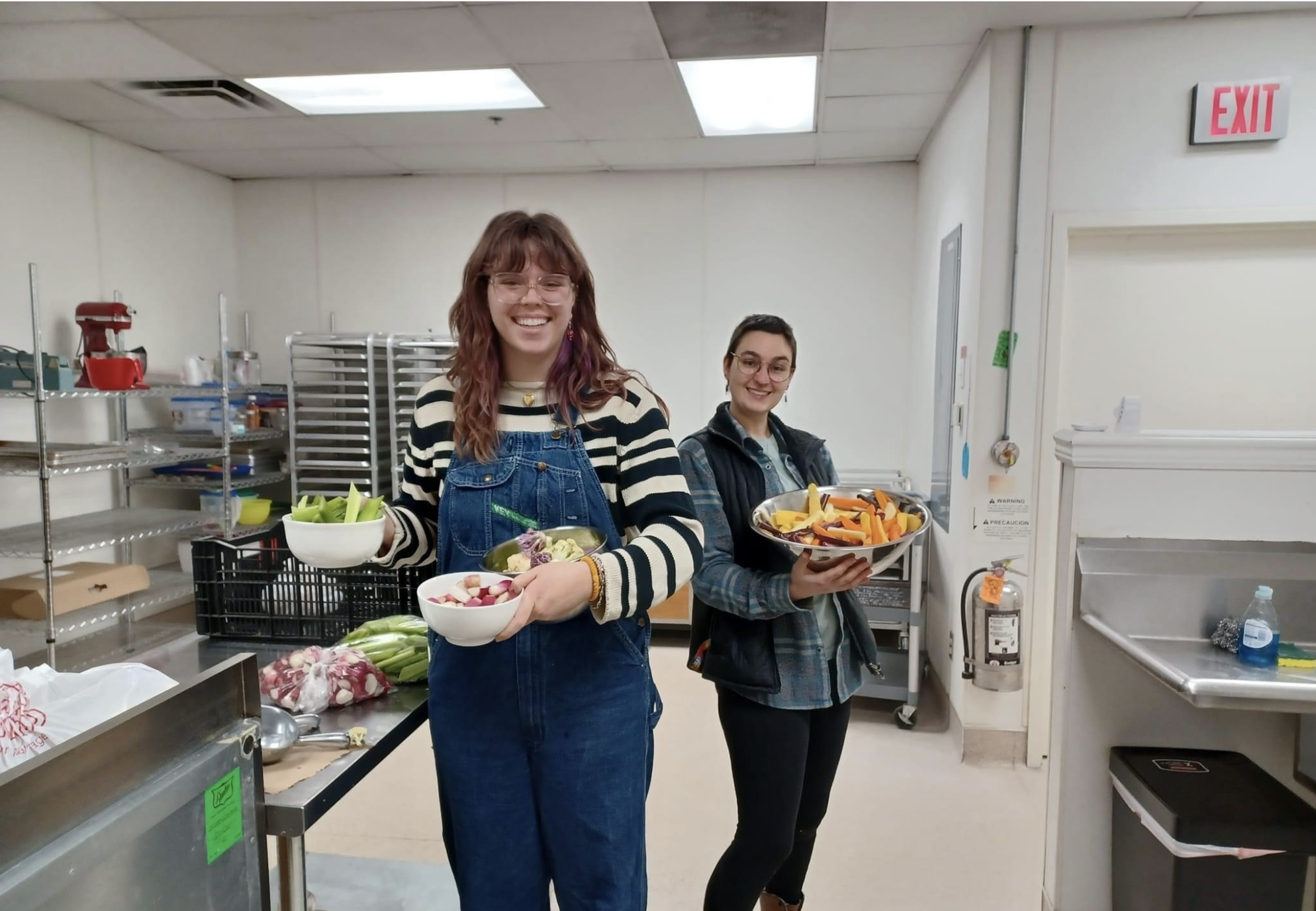
Her nonprofit, Umpqua Valley Farm to School, sits in the heart of Roseburg, Oregon. One of its programs, Rainbow Kitchen, is a space where food means something again.. Farmers drop off extra produce for neighbors in need. Families learn to cook healthy meals together. Adults with special needs practice life skills, like making healthy recipes from locally grown produce. And in between all that, small food entrepreneurs rent the kitchen to build their own dreams.
“It’s pretty amazing how many things happen under one roof,” Erin says. “We’re helping families eat healthier, helping small businesses get started, and keeping local food in our local community.”

From Soil to Systems
Erin didn’t plan to run a kitchen. She studied natural resources and geology in college, focusing on soil science and agriculture, fascinated by how healthy soil creates healthy food. After graduation, she joined AmeriCorps, where she began teaching kids about food systems.
“I saw how many kids didn’t even know where their food came from,” she says. “They didn’t know that carrots grow underground. That really stuck with me.”
Her teaching turned into a nonprofit focused on food education and access. But when her team needed a kitchen of their own, Erin realized something bigger: there were dozens of local food entrepreneurs who also needed a licensed, affordable place to cook.
“We did a food hub feasibility study and found that a shared commercial kitchen was one of the biggest needs in our area,” Erin says. “We needed a kitchen for our own work, and so did local entrepreneurs. It just made sense to create one that could serve everyone.”
A Movement That Started in a Kitchen
Rainbow Kitchen opened its doors as both a community kitchen and an incubator for small food businesses. What started as a way to support Erin’s nonprofit quickly turned into something larger: a place where farmers, families, and entrepreneurs could all thrive together.
Farmers donate their extra produce, which Erin’s team processes into soups or sauces to sell to schools and food pantries. The rent from kitchen tenants goes towards the nonprofit’s annual operating costs, freeing up grant funding for food access programs and education.
And for food entrepreneurs, the kitchen has become a launching pad.
“One of our first tenants now has their own brick-and-mortar restaurant and farm stand,” Erin says. “Others have outgrown our space too. Sometimes I think, oh man, we just lost a tenant. But that’s kind of what we want, for them to grow and have their own thing.”
Behind the Scenes: The Food Corridor
Running a space like Rainbow Kitchen could easily get overwhelming. Between community classes, tenant scheduling, and billing, Erin knew she needed structure to keep it all running smoothly.
“I can’t imagine doing this without The Food Corridor,” she says. “I would’ve had to track everyone in spreadsheets and emails. Instead, everything’s in one place: bookings, documents, payments. The Food Corridor saves me so much time.”
When new entrepreneurs reach out, Erin uses a simple email template that links to her TFC onboarding materials, pricing tiers, and insurance requirements.
“I can see if they’ve already created their profile before we even meet,” she explains. “That tells me if they’re serious and ready to go.”
With TFC managing the behind-the-scenes work, Erin can focus on what matters: building relationships, growing programs, and supporting the people who walk through her doors.
Growing the Future
What began as one woman’s fight for real food has evolved into a full-blown movement. Rainbow Kitchen has become a hub for local food systems: connecting farmers, entrepreneurs, families, and educators.
Erin’s next goal is to expand into a larger downtown space that will include retail booths and a commercial kitchen where tenants can make and sell their products side by side. She’s also collaborating with regional partners to connect coastal and inland food producers, creating new pathways for local food to reach more communities.
“It’s an exciting next step,” she says. “We want to keep creating opportunities for small businesses and families to access and make local food.”
📍 About Rainbow Kitchen
Rainbow Kitchen is a nonprofit shared-use kitchen in Roseburg, Oregon. The kitchen supports local food businesses, provides educational programs, and helps families access healthy food.
Location: Roseburg, Oregon
Follow: @umpqua_valley_f2s on Instagram
Find Them on The Kitchen Door