
A Note from the Author: I tend to keep my academic background for the boardroom rather than dinner parties, but as a food policy wonk with a Master’s in Food Policy and a PhD in Food Systems and Food Science, I can’t help but look at the 2026 data through a specific lens. My company exists to serve shared kitchen operators with tools for commercial kitchen management, so I am admittedly biased. I also recognize that many of my colleagues in the food policy and advocacy world may disagree with my assessment; where they see a necessary disruption of the status quo, I see a potential erosion of the critical professional infrastructure we’ve worked so hard to build. I welcome that debate—in fact, I think it’s necessary. If we want policy to reflect reality, we have to show up, tell our story, and be willing to examine the hard truths about how these systems land on the ground.
-
- Intro to MEHKOs (Microenterprise Home Kitchen Operations)
- How We Got Here: MEHKOs Didn’t Appear Overnight
- The California Effect
- Utah: Same Pressure, Different Approach
- Washington: Cautious, Contested, and Still Deciding
- Beyond the West Coast: MEHKOs and Food Freedom Go National
- Where The Model Gets Messy
- FutureCasting The Tradeoffs We’re Building Into The System
- What MEHKOs Mean For Shared Kitchen Operators
1. Intro to MEHKOs
Across California, counties are writing and testing the first true home-kitchen-to-consumer regulations, designed to “democratize” food entrepreneurship by allowing certain meals to be sold from a residence. The intent is understandable: lower barriers to entry, expand economic opportunity, and bring informal food businesses into a regulated framework. But as these policies move from paper to practice, the reality is already more complicated, and more consequential, than the early headlines suggest.

Local health departments, many of them already underfunded and understaffed, are now being asked to design and enforce entirely new oversight systems for thousands of decentralized home kitchens. That alone should give us pause. At the same time, tech companies are circling this sector with familiar enthusiasm—eager to insert themselves between cooks and customers, take a cut, compress margins, and scale quickly, often on the backs of the very entrepreneurs they claim to champion.
We’ve seen this pattern before. Uber and Lyft didn’t create a generation of thriving small business owners. They created a labor pool in which low-income workers drive as a primary source of income, often with limited protections and little long-term upside. So if Microenterprise Home Kitchen Operations (MEHKOs) are framed as an “equity win,” we need to fast-forward the tape and ask what we’re really unlocking. With revenue caps baked into most MEHKO laws, the likely endpoint deserves a reality check: a large class of workers capped at low income levels, doing high-labor work, while platforms and intermediaries capture the scalable margin.
Food—like transportation—is highly regulated for good reason. When systems fail, the consequences aren’t abstract. They’re personal, immediate, and public. The question isn’t just whether this model can scale, but whether it should. Is this really the Pandora’s bread box we want to open?
MEHKOs are often framed as a win for equity, and in some ways, maybe they are. But they also challenge the trust, standardization, and professional infrastructure that underpin our food system—particularly for commercial kitchens that already carry that responsibility.
A shared kitchen (sometimes called a commissary kitchen or catering kitchen) is like a gym membership for food entrepreneurs. Instead of buying costly equipment or signing a long-term lease, businesses get access to licensed, inspected, commercial-grade kitchens—ovens, mixers, refrigeration, storage, sanitation systems—on a flexible, pay-for-what-you-use basis. The infrastructure is shared, costs are affordable, sanitation standards are consistent, and oversight is centralized.
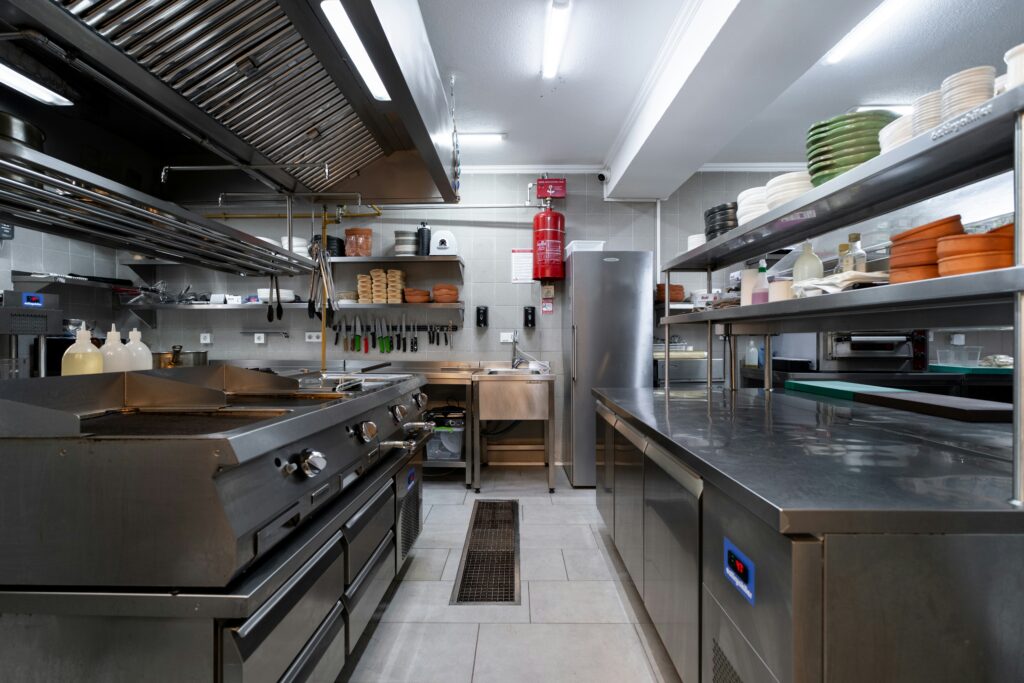
Shared kitchens are a proven model for good reason: they make professional food production accessible by lowering barriers without compromising safety. They were created in response to health department regulations, which require food businesses to operate from licensed commercial spaces. For years, they have functioned as the vital link between informal cooking and formal food businesses—a role that MEHKO policies are attempting to recreate by moving the infastructure downsteam.
For shared kitchen operators, the question is not simply whether MEHKOs should exist. It’s how they fit into a broader ecosystem that already includes shared and commercial kitchens—and whether kitchen owners should be proponents of these laws at all. Shared kitchens are already regulated, inspected, designed for safe food production, and functioning as a proven pathway into food entrepreneurship. If local governments are serious about supporting entrepreneurs while protecting public health and ensuring fairness, the answer may not be to deregulate food into thousands of private homes, but to invest more deeply in the shared kitchen infrastructure that’s already working.
This post builds on our 2024 overview of MEHKOs. If you’re new to the concept or want background on how MEHKOs work, start here:  MEHKO 2024: The Status of Home Kitchen Operations
2. How We Got Here: MEHKOs Didn’t Appear Overnight
MEHKOs aren’t a single, cohesive “movement.” They’re the policy afterlife of a very specific moment in the food-tech and sharing-economy era—and they’re now being implemented unevenly across counties, cities, and health departments. Some programs are thoughtful. Some feel rushed. Many are clearly under-resourced. And some were written with more optimism than operational realism.
Depending on where you live, “MEHKO” can mean anything from a tightly constrained, closely monitored program to a loosely defined home food framework that’s already triggering enforcement backlash. That patchwork isn’t accidental. It’s the result of how these laws came to be—and who pushed them forward.
The modern MEHKO story starts not with regulators, but with a startup.
In 2014, a California-based platform called Josephine launched in the East Bay, positioning itself as a “sharing economy” marketplace for home-cooked meals. The idea was simple and compelling: allow talented home cooks to sell meals directly to neighbors, build community, and create income without the overhead of a restaurant. At its peak, Josephine facilitated thousands of meals, and roughly one-third of its cooks were first-generation immigrants—often cited as proof that the model expanded access to entrepreneurship.
Josephine wasn’t operating in a regulatory vacuum. Cooks were required to pass background checks, obtain food handler certifications, and submit to home kitchen inspections. The platform framed itself as responsible, community-based, and fundamentally different from traditional delivery apps. But California law was clear: selling perishable prepared meals from home kitchens was prohibited.
That legal tension eventually caught up with the company. In 2018, after receiving cease-and-desist orders and threats of serious penalties against the cooks, Josephine shut down. The platform’s closure was widely covered—not just as a business failure, but as a policy failure. Supporters argued that the law was outdated, exclusionary, and blind to the realities of informal food economies.
Instead of walking away, the team behind Josephine pivoted.
After pausing the platform, Josephine’s founders and supporters shifted their focus to advocacy, forming the C.O.O.K. Alliance (Creating Opportunities, Opening Kitchens). Their goal was no longer to operate a marketplace, but to change the law itself. They argued that if home cooking was already happening informally, it was better to legalize and regulate it than to criminalize it. That framing—formalize what already exists—became the philosophical backbone of MEHKO legislation.
This matters because MEHKOs were not born as a neutral regulatory update. They arose from a direct conflict between platform-driven innovation and existing food safety laws. The laws we’re seeing now are, in many ways, a compromise between those forces: an attempt to create a legal pathway for home meals without fully reopening the door that platforms like Josephine had tried to push through.
And that origin story explains much of why MEHKO laws look the way they do today.
They’re cautious, capped, and highly variable. They’re designed to allow home cooking—but not at restaurant scale. They’re written to appease public health concerns while responding to years of pressure from advocates who saw enforcement as exclusion. And they’re being implemented locally, often without the staffing, funding, or technical infrastructure to fully support what the law allows on paper.
So when we talk about MEHKOs as a “movement,” it’s worth remembering: this isn’t a grassroots uprising of home cooks alone. It’s the downstream result of a failed platform, a policy campaign, and a broader reckoning with how informal food economies collide with formal regulation.
If you want to understand where MEHKOs are headed, you have to look at California. Not because California has solved the problem, but because this is where MEHKOs stop being theoretical and start colliding with real markets, real regulators, and real constraints.
California is the primary proving ground. This is where home-meal laws have moved from policy language into lived conditions: actual permits, customers, complaints, and enforcement questions. It’s also where the tension between local food entrepreneurship and platform-scale ambition becomes impossible to ignore.
True to form, California responded by creating a highly defined legal category. The result is a framework that brings clarity and political durability—but also complexity. Fees, layered definitions, and compliance requirements that may read cleanly in statute can feel daunting on the ground.
At the center of the framework is California Health & Safety Code §113825, which defines a “microenterprise home kitchen operation” as a resident-operated food facility in a private home where food is stored, handled, prepared, and served directly to consumers.
California did not legalize MEHKOs as a backdoor version of restaurants. It legalized them as something else entirely: a tightly bound category designed to limit risk, control scale, and keep operations direct-to-consumer.
In practice, the statute sets a few very intentional constraints:
- It keeps MEHKOs small. Operations are limited to one full-time equivalent food employee (excluding household members), reinforcing that this model is meant for owner-operators—not production teams.
- It requires same-day preparation and service. Food must be prepared, cooked, and served on the same day, limiting batch production, cold holding, and multi-day inventory.
- It caps volume and revenue. MEHKOs are limited to 30 meals per day and 60 meals per week, with gross annual sales capped and indexed to inflation—clear signals that this is an entry point, not a scaling pathway.
- It draws firm public health boundaries. Higher-risk foods and processes are prohibited, including raw oysters, raw milk products, and any activity requiring a HACCP plan.
- It maintains food safety oversight. Food safety training, permitting, and inspections are required, even as regulators acknowledge that home kitchens are not purpose-built commercial environments.
Taken together, the law makes California’s intent clear: allow home-based food businesses to exist, but keep them limited, monitored, and contained. MEHKOs are not meant to replace restaurants, caterers, or shared kitchens. They’re meant to sit below them—carefully.
California Anticipated the Platform Layer
One of the most telling aspects of California’s approach is its explicit acknowledgment of the internet economy.
The Health and Safety Code doesn’t just define MEHKOs. It also defines Internet Food Service Intermediaries (IFSIs) — platforms that advertise, list, or connect consumers to home-based food sellers. In other words, California didn’t pretend MEHKOs would remain small, neighbor-to-neighbor operations forever. It recognized that platforms would immediately attempt to scale them.
Under the IFSI rules, platforms must register with the state, disclose permit requirements and fees, and provide complaint-reporting pathways so counties can enforce the law. They must also clearly identify whether a seller is permitted and which agency regulates them.
The real MEHKO question isn’t just about whether home cooks can sell food. It’s about what happens when platforms insert themselves between cooks and customers, scale demand faster than oversight can keep up, and extract margin in the process. While California formally regulates IFSIs to promote transparency, traditional intermediary food platforms charge commissions of 15%-30%, sometimes leading to delivery markups of up to 80% for consumers.
California restricts how MEHKO food can be marketed and delivered. For example, IFSIs cannot use “catering” terminology and cannot serve as a loophole for third-party delivery models.
This is California attempting something genuinely difficult: formalizing a decentralized food economy while protecting public health AND trying to prevent the platform layer from swallowing the model whole.
CDPH maintains a list of registered Internet Food Service Intermediaries, but it is not made public. I submitted a records request and located this 2021 list from San Mateo County. Notable players on the list include:
- Cook Connect Inc., formerly Josephine, which became the COOK Alliance, and recently merged with Foodnome.
- Shef, Inc
- Airbnb, Inc, which recently announced its partnership with CookUnity.
- Chefbnb
- Hungry Hop
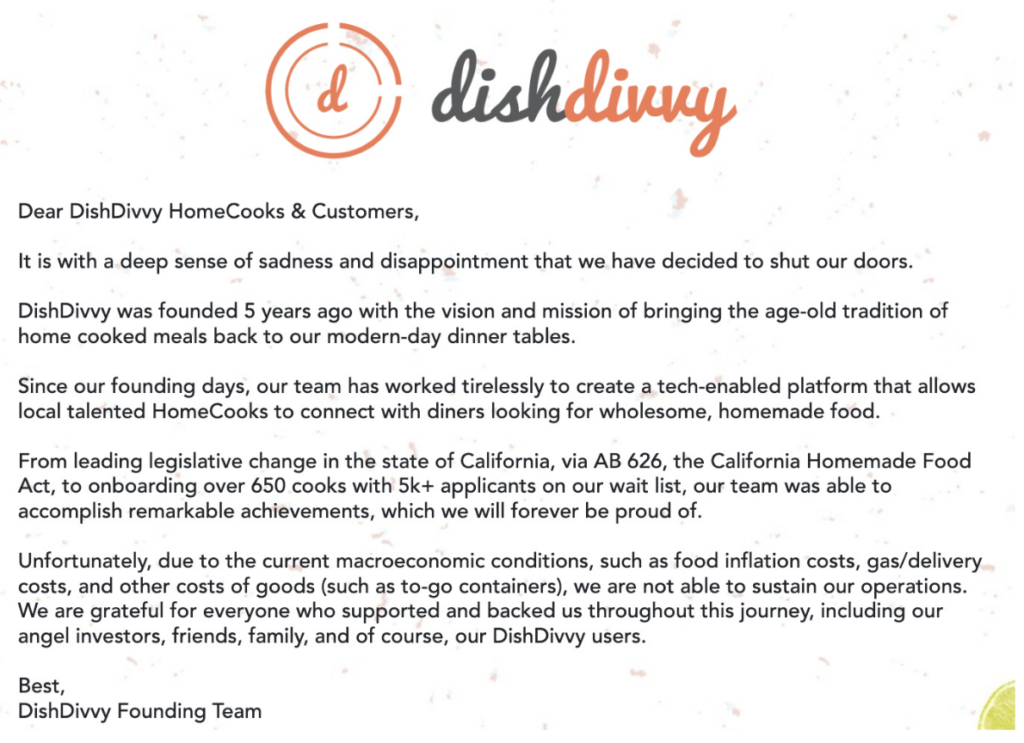
Quite a few IFSIs on the list have folded since 2021, as evidenced by their websites no longer being active. They include: At Home Grub, ZipHomeChef, Potluck Community, MicroMunchie, HomeMadeGrub, Savorly App, etc.
Only DishDivvy, Inc. provided reasoning for their departure:
Local Health Departments Control the Reality
While California passed MEHKO legislation at the state level, implementation is left to local jurisdictions. That means the program lives or dies at the county level.
Local health departments decide whether to adopt MEHKOs, how many permits to issue, how strictly to enforce, what the inspection process will look like, and what they can monitor. The statute may be statewide, but whether a cook can operate legally still depends on where they live — and what their county is willing and able to support.
Los Angeles: The First True Stress Test
Since our 2024 update, the single most significant milestone for MEHKO implementation has been Los Angeles moving from a pilot into a permanent countywide program effective November 1, 2024.
Long considered a “white whale” by advocates, L.A.’s decision marks a shift from earlier adopters unleashed into one of the highest-volume, highest-visibility food markets in the country. Los Angeles already has one of the largest informal food economies in the U.S., driven largely by immigrant entrepreneurs who have been feeding communities for decades outside traditional regulatory pathways.
Street vending alone is estimated to be a $504 million informal economy in Los Angeles County, supporting tens of thousands of vendors and thousands of jobs through both direct earnings and neighborhood purchasing activity. In that light, L.A.’s MEHKO adoption isn’t just a policy win — it’s an acknowledgment of an economic reality that already exists.
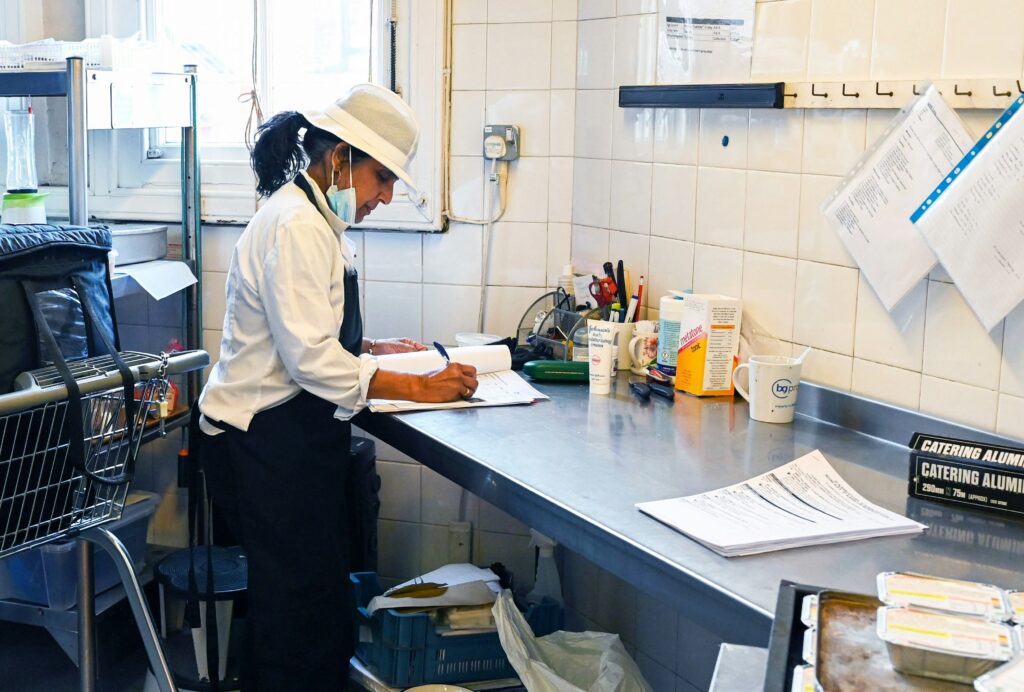
In L.A., MEHKOs are treated much like tiny, regulated restaurants operating out of a residence. Food must be prepared, stored, and served on the same day. Meals can be consumed on-site, picked up, or delivered directly by the operator or a single allowed employee. A permit, food safety certification, menu SOPs, inspection records, and detailed sales tracking are required. MEHKOs are capped at 30 meals per day, 90 per week, and $100,000 in annual gross sales (adjusted to $107,121 in 2025). Wholesale, catering, and sales to stores are prohibited.
L.A. County backed the rollout with real resources. By May 2025, over 100 permits had been issued, and $600,000 in American Rescue Plan Act funding was allocated to waive the initial $597 application fee for the first 1,000 permittees through June 30, 2026. Nonprofit funding support followed as well, including COOK Alliance’s COOK Academy, which offered $3,000 grants raised from organizations to help home cooks cover early business costs as they formalized.
On paper, enforcement emphasizes education first. Inspectors are expected to help operators correct issues before escalating. But meaningful enforcement authority exists if violations persist or public health risks arise. Complaints about foodborne illness trigger inspections, follow-ups, and potentially additional fees — and advertising must clearly state that food is “Made in a Home Kitchen,” along with the issuing health agency, so consumers understand the source.
Public health and consumer awareness are core rationales for MEHKO policy. At the same time, enforcement realities directly shape competition. Brick-and-mortar restaurants and shared kitchens absorb significant compliance costs every day — from equipment and inspections to staffing and lingering pandemic debt. When MEHKOs operate with lower structural costs and a lighter inspection cadence, questions about fairness are unavoidable.
And this is where L.A. draws its clearest line: MEHKOs cannot use third-party delivery apps. No DoorDash. No Uber Eats. Delivery must be made directly by the operator, or customers must pick up themselves.
That restriction speaks volumes. It appears that regulators are trying to prevent a delivery-platform layer that could scale demand far faster than health departments can reasonably inspect or enforce. They want MEHKOs to remain small, traceable, and community-based — not to create de facto ghost kitchens that feed an opaque logistics network.
Herein lies the tradeoff. Without platform access, MEHKOs rely heavily on word-of-mouth and local discovery. That keeps operations smaller and more neighborhood-oriented, which is exactly the point. But it also limits revenue growth — a reality that runs counter to what many early advocates and platform aggregators imagined when they talked about “unlocking” this sector of the economy.

California’s 2026 Reality: Not a Movement, a Patchwork
By 2026, California makes one thing painfully clear: MEHKOs are not a single, cohesive “movement.” They’re a patchwork of local experiments that look very different depending on where you live, who runs the health department, and what local leaders decide is “good enough.”
California has a statewide statute, but the lived MEHKO experience is unfolding county by county. Implementation timelines, enforcement priorities, staffing capacity, and technical support vary widely — and that variation shows up clearly in who participates and how.
One way to see that “patchwork” reality is simply which counties have adopted MEHKOs — and how uneven that adoption remains. As of mid-2025, 18 California jurisdictions (17 counties plus the City of Berkeley) have authorized Microenterprise Home Kitchen Operations under state law. These include long-standing programs such as Riverside, Solano, and Alameda; recent adopters such as Santa Cruz, Sonoma, and San Mateo; and major population centers such as San Diego and Los Angeles.
Importantly, many counties — including large ones like Orange, Sacramento, and San Francisco — still have no MEHKO program, highlighting how localized the policy’s implementation has become.
You can review the participating counties here.
What’s especially revealing is how this uneven reality shows up in the media.
For example, in San Diego, local reporting isn’t focused on regulatory theory. It’s focused on behavior. According to 10News, some entrepreneurs are actively choosing MEHKOs over commercial kitchen space, walking away from leases and rentals in favor of home kitchen permits as a more affordable way to operate. That matters. It shows MEHKOs influencing real business decisions, particularly for smaller operators squeezed by rent, utilities, and brick-and-mortar overhead.
That shift highlights a core dynamic: MEHKOs are changing the timeline for formalization. For cooks who once spent years saving, planning, and trying to secure licensed space, MEHKOs can feel like a breakthrough — a way to start selling sooner. But the barriers don’t disappear. They move.
In Los Angeles, ABC7 profiles a home-based coffee shop and frames MEHKOs almost like the next frontier of “working from home.” It’s warm, optimistic storytelling — and understandably so. Entrepreneurship is real, and the consumer appeal is obvious. But the framing sidesteps harder questions: what oversight looks like at scale, who carries risk, and how public trust holds when “restaurant” starts to mean “someone’s house.”
In Santa Cruz, KION Central Coast leans into the equity-and-opportunity storyline: a permit, a kitchen, a path forward for cooks priced out of commercial space. That argument resonates because the barriers are real. But the story also surfaces the friction that rarely makes it into advocacy talking points — limited marketing channels, meaningful compliance burdens, and the reality that pilots are forgiving in ways full programs are not.
Then there’s Pasadena, which may offer the most honest snapshot yet. Pasadena Now reports on city officials openly debating whether to allow residents to operate small-scale restaurants out of private homes — and the tension is palpable. Neighborhood impacts. Enforcement feasibility. Fairness to existing businesses. Administrative cost. Political risk. All at once.
One detail stands out. Pasadena’s proposal would prohibit third-party delivery platforms like DoorDash and Uber Eats — except for customers with disabilities. That carve-out raises an uncomfortable question: how do you prevent a narrow exception from becoming the loophole that defines the model? Once some have platform access, enforcing limits for others becomes exponentially harder.
You have to empathize with the health department staff tasked with making this work. Pasadena’s analysis notes that inspections would be by appointment only and that health standards would be lower in 25 areas compared to other food facilities. That’s not a footnote. That’s the core tradeoff. We are asking regulators to create a deliberately lighter tier of food oversight — while still expecting public trust to hold.
And then there’s cost. Pasadena estimates first-year administrative expenses of $125,000, with permit fees set to recover full costs. Other departmental costs remain unknown but are likely to increase. The state offers $20,000 for feasibility studies — not enough to fully fund the analysis, let alone operate a program.
Which brings us back to the central California truth: MEHKOs are not just a food entrepreneurship policy. They are an administrative and enforcement commitment.
Local governments debating adoption are being forced to answer a very practical question: Do we actually have the staffing, funding, and political will to regulate thousands of decentralized home kitchens — while still protecting public health and fairness in the broader food economy?
These stories together capture what California is living through right now:
- MEHKOs as human-interest entrepreneurship
- MEHKOs as an economic opportunity
- MEHKOs as a regulatory stress test
All three can be true at once.
California isn’t showing us a single MEHKO future. It’s showing us several futures at once.
4. Utah: Same Pressure, Different Approach
Utah and California are frequently compared because both have moved beyond basic cottage food to true home-meal frameworks. But treating them as comparable models would mean missing formative differences. These states are responding to the same pressure with very different regulatory instincts, shaped by very different political and administrative cultures.
Utah legalized microenterprise home kitchens earlier and more quietly, with the passage of HB 94 in 2021. The law emerged from a strong food-freedom ethos and a statewide desire to reduce barriers to entry, not from years of pilots or county-by-county negotiation. Instead of creating a tightly bound new category with explicit meal counts and revenue ceilings, Utah took a procedural approach. The focus is not on how big a home kitchen can get, but on how it operates — and how risk is managed after the fact.
Under Utah’s framework, home kitchens are authorized statewide and permitted through local health departments, which are responsible for implementation and enforcement. The statute and administrative rules place heavy emphasis on sanitation standards, written operating procedures, time-and-temperature controls, documentation, and consumer disclosure. Same-day preparation rules apply to perishable foods; on-site consumption is prohibited; and operators must clearly notify customers that the food is prepared in a home kitchen under modified regulatory standards.
Where California controls scale through hard limits, Utah controls risk through procedure.
Salt Lake County’s implementation, adopted in 2024, shows what that looks like in practice. The county does not introduce new numerical caps. Instead, it emphasizes documentation, consent to inspection, and complaint-driven oversight. Inspections may occur at permitting or in response to complaints, rather than on a fixed annual schedule. Operators are required to maintain SOPs, sanitation plans, and temperature controls, and to explicitly acknowledge that they are operating under modified FDA requirements rather than full commercial standards.
This approach reflects Utah’s broader philosophy: trust operators and consumers, rely on transparency, and intervene when problems surface — rather than constraining activity up front. It’s a fundamentally different posture than California’s, and one that shifts responsibility away from preemptive limitation and toward enforcement reality.
Both states are trying to answer the same question: how do you make space for food entrepreneurship without compromising public health or fairness? They’re just building different ladders.
California built a narrow staircase, complete with handrails, signage, and a clear height limit. Utah built a wider ramp and trusted that most people would stay within the lines. By 2026, both approaches are revealing the same uncomfortable truth: legalizing home kitchens does not automatically formalize the food economy. It simply shifts where the pressure shows up — between compliance complexity and enforcement capacity.
5. Washington: Cautious, Contested, and Still Deciding
Washington’s MEHKO story looks very different from California’s or Utah’s. In 2026, the state isn’t rolling out a full home-meal program. It’s still deciding whether it should — and how cautiously.
For years, Washington’s only legal pathway for home-based food businesses has been its Cottage Food law. That framework is narrow by design. It allows non-perishable foods — baked goods, jams, shelf-stable items — and little else. No hot meals. No meat. No full-service home restaurants. For many cooks, especially those whose food doesn’t fit neatly into a “cookie and granola” category, cottage food has never been a meaningful option.
That gap has fueled growing pressure for change.
Advocacy groups like the COOK Alliance and the Institute for Justice have pushed MEHKOs as a “bridge to business,” arguing that commercial kitchens are expensive, access is uneven, and without a legal home-based option, many low-income and immigrant entrepreneurs remain informal. From this perspective, Washington is “behind” states like California and Utah.
Public health officials have been more cautious. The Washington State Department of Health has consistently raised concerns about food safety in residential kitchens — particularly cooling, cross-contamination, and the limits of inspecting private homes. Rather than rushing to legalize home meals, DOH has pointed to shared and commissary kitchens as safer, more scalable alternatives.
That tension has shaped Washington’s approach: slow, deliberate, and pilot-driven.
Instead of full legalization, lawmakers have leaned toward limited pilot programs with tight caps, strict operating rules, and same-day preparation requirements designed to reduce risk while data is gathered. At the same time, the state has incrementally expanded its Cottage Food law by raising revenue caps and extending permit terms, signaling openness to more opportunities without fully opening the door to home restaurants.
Public response reflects this middle ground. Aspiring cooks continue to cite high barriers to entry, especially the cost of accessing commercial kitchen space in places like King County. Traditional restaurants raise familiar fairness concerns, questioning how home kitchens can compete without the same infrastructure or compliance costs.
As of 2026, Washington is firmly in an assessment phase. Lawmakers have directed agencies to conduct environmental justice reviews and feasibility studies as California wrestles with implementation and Utah with enforcement.
Washington hasn’t decided what its MEHKO future looks like yet. But its hesitation is telling. The state is asking whether the systems needed to regulate thousands of decentralized home kitchens actually exist — and whether shared, licensed kitchen infrastructure might already be doing much of the work policymakers are trying to recreate.
6. Beyond The West Coast: MEHKOs and Food Freedom Go National
By 2025 and 2026, home-meal policy was no longer a West Coast experiment. What began in California — and took a very different shape in Utah — has entered its next phase. States across the Midwest and East Coast are now testing their own versions of MEHKOs and broader “food freedom” laws, many of them explicitly aimed at allowing home cooks to sell hot, perishable meals.
The drivers are familiar: rising commercial rents, uneven access to licensed kitchen space, and growing demand for hyper-local food. What’s changed is context. These debates are no longer hypothetical. Lawmakers are drafting bills with California’s implementation challenges and Utah’s enforcement reality already on the table — treating them simultaneously as proof points, warnings, and stress tests.
In states like Ohio, Minnesota, and Michigan, legislators have introduced MEHKO-style frameworks that go beyond traditional cottage food regulations. Some create new categories for home-based meal production. Others expand revenue caps or blur the line between shelf-stable foods and hot meals without fully breaking from existing models. The details differ, but the direction of travel is consistent: states are actively reconsidering whether commercial kitchens should remain the default gatekeeper for food entrepreneurship.
At the same time, a parallel shift is accelerating. Beyond explicit MEHKO bills, states are revisiting one of the most entrenched barriers in food policy: Time/Temperature Control for Safety (TCS) foods. For decades, cottage food laws drew a hard line at refrigeration — no meat, no hot meals, nothing meant to be eaten fresh. In 2026, that line is being redrawn. Texas expanded its cottage food law to allow most TCS foods. Georgia eliminated revenue caps entirely. Even historically restrictive states have loosened rules compared to a decade ago.
Despite regional differences, these laws are converging around a familiar shape. Meal limits are common, often hovering around 30 meals per day or 90 per week. Revenue caps vary widely. And direct-to-consumer sales are nearly universal, with most states drawing firm lines against third-party delivery platforms.
Pay attention to that last point. Even as lawmakers loosen restrictions on where food can be made, they are becoming more cautious about how it reaches customers. The consistent resistance to platform-mediated delivery suggests a growing awareness of what happens when intermediaries scale faster than regulators can inspect, monitor, or enforce — and an effort, sometimes clumsy, to avoid repeating the extraction dynamics that reshaped transportation and restaurant delivery.
Taken together, this is no longer a fringe policy trend. It’s a national rethinking of where food can be made, who can participate in the market, and what role regulation should play. And as more states experiment, the same question keeps resurfacing: whether deregulating production in private homes is truly the solution—or whether the infrastructure already in place, quietly doing the work, has been underestimated all along.
As MEHKOs move from statute to the streets, the hard questions are no longer theoretical. They’re operational, economic, social, and political. Not because MEHKOs are inherently flawed, but because relocating food production into private homes exposes tradeoffs that policy language alone can’t smooth over.
Public Health: Adequate Safeguards or False Confidence?
One of the most persistent concerns comes from public health professionals and consumers alike: home kitchens are not purpose-built commercial environments.
Even with food safety training and inspections, residential settings introduce variables that are hard to fully control. Sanitation practices can vary widely. Pest management is inconsistent. Cold storage and temperature control are often constrained by household equipment. Multi-use spaces — shared family sinks, refrigerators, and counters — increase the risk of cross-contamination in ways commercial kitchens are explicitly designed to avoid.
Then there’s the reality of home life itself. Pets. Children. Limited storage. Kitchens designed for family meals, not production runs. None of this automatically makes food unsafe. But it does undermine the core premise of standardized food safety: removing as many variables as possible.
Inspection capacity only sharpens the issue. Some jurisdictions have staff, funding, and experience. Others don’t. As MEHKOs scale, the question becomes unavoidable: are food safety outcomes being actively measured, or assumed simply because a framework exists?
For shared kitchen operators, this tension is familiar. These are the risks you manage daily, often at high cost, to create environments consumers trust.
Fairness and Competition in the Food Economy
The next pressure point is economic fairness.
Restaurants and shared kitchens operate under dense layers of regulation: fire and building codes, commercial equipment requirements, routine inspections, staffing rules, rent, utilities, and insurance — many still while carrying pandemic-era debt. MEHKOs intentionally bypass much of this.
Supporters frame that gap as a barrier to be reduced. Critics see two regulatory classes of food businesses competing in the same local markets.
For operators already working on thin margins, the concern is practical, not ideological:
Are MEHKOs a short-term stepping stone — or do they become structurally advantaged competitors who can operate cheaper indefinitely?
So far, the answer appears to be both. And that ambiguity is where friction grows.
Livelihood or Gig Economy?
This is where the conversation gets especially uncomfortable.
MEHKOs are often described as entrepreneurial. But under tight meal and revenue caps, many operate closer to piecework economics. Limited production volume, retail-priced ingredients, daily shopping, constrained storage, and inefficient equipment keep costs high. Labor is frequently unpaid — not because it isn’t valuable, but because pricing it honestly would make the business untenable.
Add hidden expenses — utilities, packaging, insurance gaps, vehicle wear, compliance time — and the model starts to resemble other gig-economy systems we’ve seen before: real work, real risk, capped upside.
That doesn’t make MEHKOs illegitimate. But it does force a distinction policymakers rarely name:
Are we building pathways to ownership — or pathways to perpetual hustle?
Zoning, Housing, and Insurance: The Unspoken Constraints
MEHKOs also collide with realities most statutes barely address.
Zoning and land-use rules weren’t written with home restaurants in mind. Neither were residential leases. Many renters are prohibited from operating businesses at home, which raises a quiet but important equity question: do MEHKOs primarily benefit homeowners?
Insurance adds another layer. Increased foot traffic, deliveries, and on-site activity can fall outside standard homeowners’ or renters’ policies. Few operators fully understand their exposure — until something goes wrong.
These aren’t edge cases. They’re structural frictions that shape who can participate and who can’t.
Platforms, Scale, and Value Capture
Finally, there’s the platform question — the one California anticipated explicitly.
Once intermediaries sit between cook and customer, demand can scale far faster than local health departments can inspect or enforce. That’s why many MEHKO programs prohibit DoorDash, Uber Eats, and similar platforms outright.
The logic is sound. Platform commissions of 15–30% are incompatible with already-thin margins. Consumer behavior is shifting too, with growing delivery fatigue and resistance to inflated prices.
Convenience has limits. So does extraction.
Why Standardized Infrastructure Still Matters
All of this brings us back to infrastructure.
Regulation isn’t just red tape. It’s the shared baseline of cleanliness, consistency, and accountability that allows the public to eat with confidence. Cleanliness is subjective. Commercial health codes are not.
Scaled across thousands of private homes, oversight becomes exponentially harder. For already under-resourced health departments, that challenge isn’t abstract — it’s operational.
Shared kitchens and licensed restaurants exist for a reason. They concentrate risk, standardize safety, and make entrepreneurship legible to regulators, customers, and operators themselves.
The question isn’t whether MEHKOs should exist. It’s whether pushing food production deeper into private homes is the right long-term answer — or whether strengthening shared, professional infrastructure is the more durable investment.
For shared kitchen operators, MEHKOs are neither an existential threat nor a tidy complement. They’re a forcing function. They push long-standing questions about access, regulation, and growth into the open—and they change the front end of the food business pipeline.
MEHKOs lower the barrier to entry. But they don’t replace shared kitchens, especially for operators who desire consistency, scale, and long-term viability. In practice, most MEHKOs hit a ceiling. Revenue caps, meal limits, and restrictions on staffing and sales mean that those who use MEHKOs as an entrepreneurial pathway will eventually demand something more durable and sustainable.
That “something” is professional infrastructure.
Shared Kitchens Are Still the Growth Infrastructure
Shared kitchens occupy the critical middle ground between home-based production and independent facilities, where most food businesses can operate safely, professionally, and sustainably.
That middle ground already includes food models regulators understand well: pop-ups, food carts, and food trucks. These businesses are often treated as exceptions, but functionally they rely on the same shared kitchen infrastructure—licensed prep space, cold storage, dishwashing, inspections—to operate legally and safely. They separate production from the home, maintain public accountability, and allow entrepreneurs to test demand without locking into permanent real estate.
Shared kitchens are critical food system infrastructure providing:
- Inspected, commercial-grade space
Purpose-built kitchens with proper ventilation, layout, and equipment—designed for safe, repeatable production, not retrofitted household use. - A real separation between work and home
Physical and psychological boundaries that reduce burnout, protect households, and reinforce professionalism. - Lower risk through shared systems
Fire suppression, grease traps, pest control, waste management, refrigeration, and inspections are shared costs—not individual gambles. - Room to scale without a long-term lease
Entrepreneurs can grow volume, test staff, and expand menus without committing to a five- or ten-year lease before the model is proven. - Equipment that unlocks growth
Commercial mixers, ovens, prep space, storage, and refrigeration change what’s possible—operationally and economically. - Credibility
Operating from a licensed kitchen changes conversations with buyers, regulators, lenders, insurers, and partners. - Community
Shared kitchens are one of the few places where food entrepreneurs learn alongside each other—sharing labor, vendors, advice, and hard-earned knowledge. - A visible path forward
From proof of concept to employer, from informal to formal, the ladder is legible. Shared kitchens don’t cap ambition—they support it.
Shared kitchens have always carried this value implicitly; this moment demands that we make it explicit—to regulators, funders, and policymakers who are actively redefining the food business landscape without fully understanding the infrastructure that already holds it together.
A Strategic Moment for the Industry
This is not a moment for shared kitchen operators to sit quietly on the sidelines.
MEHKOs are being debated, designed, and implemented right now. If shared kitchen operators aren’t part of those conversations, decisions about our work will be made without a full understanding of it. That’s not a failure of policymakers—it’s what happens when the people closest to the infrastructure don’t show up.
Shared kitchens are not a niche workaround. They are the heart of local food systems.
They are where food businesses formalize.
Where safety becomes standardized.
Where entrepreneurs move from idea to income to employer.
This industry has already done the hard work these policies aim to address. Shared kitchens lower barriers without abandoning standards. They reduce risk without capping ambition. They create dignified, scalable pathways into food entrepreneurship—without extracting margin or relying on perpetual subsidy.
So the call to action is simple: be part of the dialogue.
Use the data.
Use the reports.
Use the case studies that show what shared kitchens already make possible.
Share them with health departments, economic development agencies, and local officials who are searching for a responsible middle ground. Help them see that the infrastructure they’re trying to invent already exists—and that it’s working.
The work shared kitchens do every day—supporting formalization, mentorship, compliance, and growth—isn’t just important.
It’s foundational.
It’s critical.
And it’s right.
If we want policy to reflect that reality, we have to show up, tell our story, and make the value of shared kitchens impossible to ignore. Here is a policy brief we wrote to help you communicate.
A Next Step for Shared Kitchen Operators
Looking to position your kitchen as the next logical, professional step from home-based production to scalable growth?
See how shared kitchens use The Food Corridor to streamline operations, support member growth, and adapt to a changing food business landscape.
Sign up for our newsletter.
Join the Network for Incubator and Commissary Kitchens.
Come to our Shared Kitchen Summit.