Every week in online groups, someone asks some version of the same question: “What software are you using to manage orders?” And every week, the answers fly in — Hotplate, Bakesy, MyCustomBakes, a Google Form, Instagram DMs, a Notes app on someone’s phone.
This post is an attempt to slow that conversation down and make it actually useful. Because the right answer is not the same for everyone, and choosing the wrong platform early can cost you more than you think — in real dollars, in lost customers, and in the headache of migrating everything later.
Let’s start with why this even matters.

The Pain Points Everyone Shares
If you’re running a cottage food business without dedicated software, you already know the chaos:
Orders live everywhere. You’re checking Instagram DMs, texts, your email, and a Facebook Messenger thread all at once. You copy them into a spreadsheet (if you’re organized) or a sticky note (if you’re honest). Things fall through the cracks. You double-book yourself. You forget who paid.
Payment chasing is its own part-time job. You send a Venmo request, wait, send a reminder, wait, send another reminder. Some customers ghost you until pickup day. You made 60 cookies for someone who isn’t responding now.
Custom pricing is a mess. A standard loaf of sourdough might be $10 at the farmers market, $12 from your website, and a decorated birthday cake takes four messages back and forth before you even know what to charge.
Your availability is invisible. Customers reach out while you’re at capacity, and you have to turn them down over text. Or worse — you don’t catch it in time and say yes to too many orders.
Looking professional is hard when the infrastructure isn’t. Customers who find you through Instagram may click away if there’s no clean way to place an order. A link to “send me a DM” doesn’t build confidence.
Good software solves most of this. But “good” depends on how you actually sell.
Before You Pick Software, Know How You Sell
Before comparing any platform, get honest about your primary selling model — because each platform is built around a specific one.

The Custom Order Baker takes one-off requests: decorated sugar cookies, wedding cakes, themed birthday cakes, allergen-specific orders. Every order is different. Pricing isn’t fixed. You need to see the request, ask follow-up questions, give a quote, and get approval before anything is confirmed.
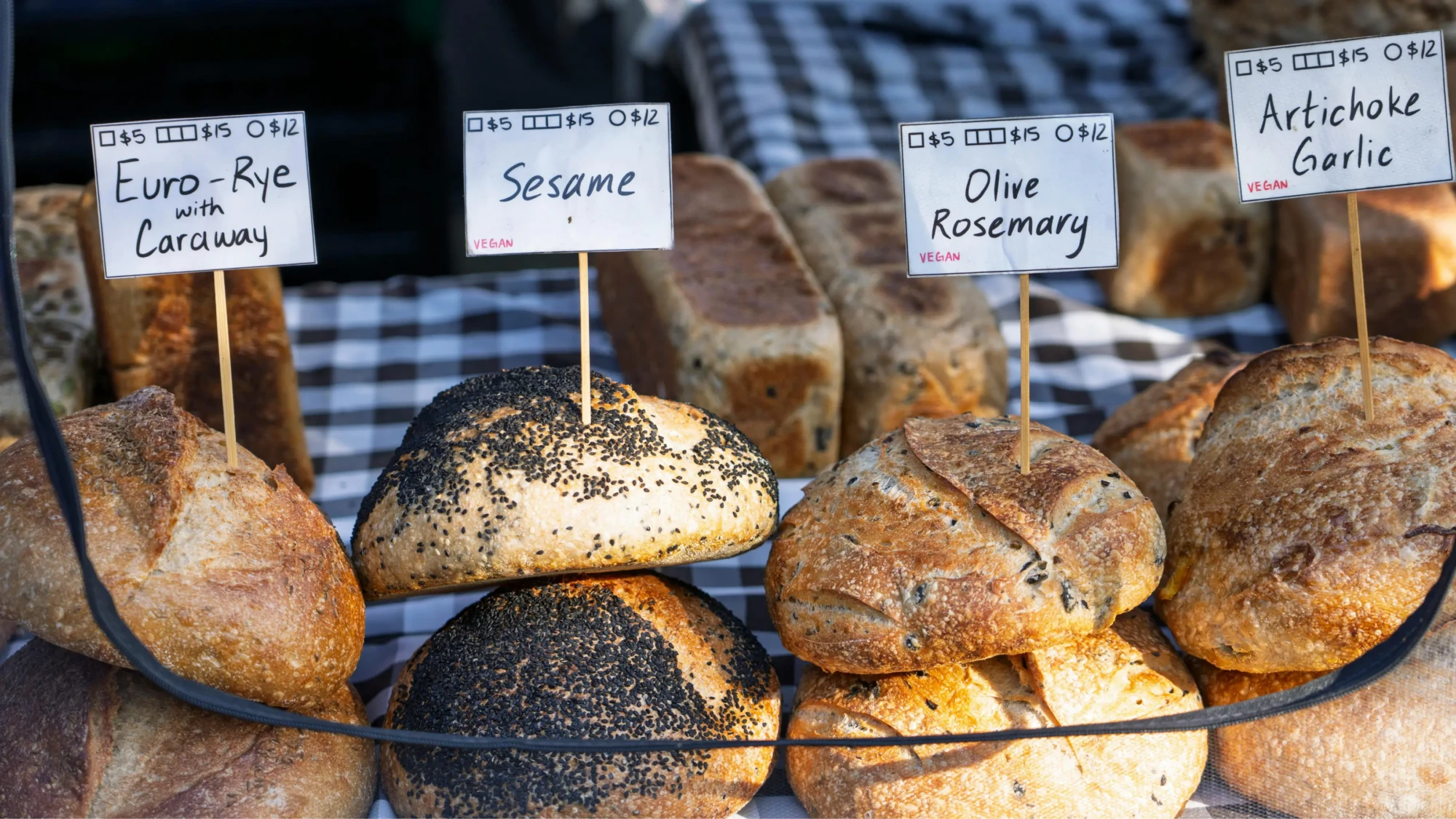
The Batch/Drop Baker produces a set menu on scheduled bake days. You open ordering on Tuesday, close it Thursday, bake Saturday, and do pickups Sunday. Your customers know the window and scramble to grab their spot before you sell out. Sourdough bakers and specialty bread makers often sell this way.
The Farmers Market / Pop-Up Vendor sells in person, often without pre-orders — though many take pre-orders for market day pickup to guarantee product. You need something lightweight that works offline or on a phone. If you’re operating a food truck, you’ll also want to think about commissary requirements — here’s what you need to know.
The Always-Open Shop keeps a menu available for ordering anytime, with set pickup windows. More like a mini-bakery than a one-off operation.
The Mixed-Model Baker does a little of everything — some custom orders, some pre-orders, maybe a market once a month.
Most platforms are optimized for one or two of these. The ones that try to do all of them often do none of them especially well.
The Platforms, Honestly Reviewed
MyCustomBakes
Best for: Custom order bakers — decorated cookies, cakes, specialty orders
Cost: $10/month or $110/year. No transaction fees.
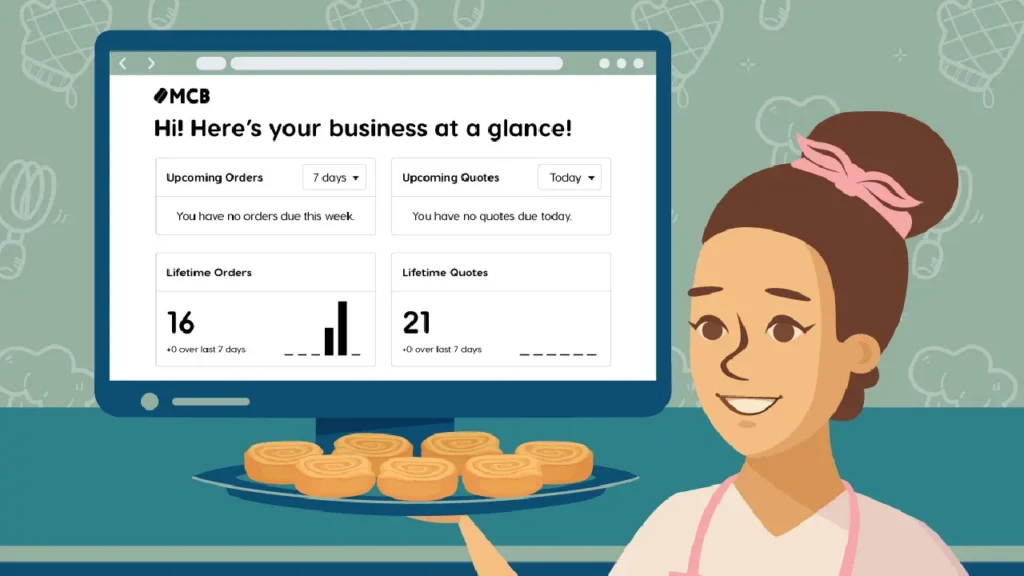
MyCustomBakes was built by bakers specifically for the quote-to-order workflow that custom bakers live in. That shows. The core feature is a quote process where a customer submits a request, you review it, ask questions, and turn it into an order — or decline it — before anything is confirmed. This matters when you’re doing $300 custom cookie orders and can’t afford a ghosting situation after you’ve already started prepping.
What it does well:
- The quote → order workflow is the best in the space for custom requests. You control what becomes an order.
- A built-in Presale Module lets you set pre-order windows with specific pickup dates and locations — so you can also handle batch/drop selling without switching platforms.
- Chat Center keeps all customer communication tied to the specific order, so the conversation history lives in context rather than in your inbox.
- Flexible deposit collection (you set the amount and due date per order — could be 50% upfront, balance two weeks before pickup, whatever makes sense).
- Availability management lets you block dates, set lead times, and prevent overbooking.
- Automated emails and payment reminders run in the background so you’re not chasing.
- Built-in terms and conditions template, which protects you legally and looks professional.
- Integrates with Square for in-person payment.
- 1,650+ bakers, founded and run by bakers since 2021. Bootstrapped — no investor pressure to change the model.
Limitations:
- The storefront is semi-customizable, not a full website builder. If you want something that looks like a polished brand website, you may want to pair it with your own domain (which it does support as a redirect).
- Better suited to custom/quote-based work than always-open catalog shopping.
- Not built around the drop/waitlist UX that sourdough-style bakers love.
The fee math: $10/month flat. On $1,000/month in sales, you’re spending 1% on the platform. Stripe or Square processing fees apply, but MCB takes nothing from your sales.
Hotplate
Best for: Drop-style / limited release bakers — sourdough, bagels, specialty bread
Cost: $0 subscription — but 5% + $0.55 platform fee added to customer’s checkout, plus 2.9% + $0.30 payment processing you absorb
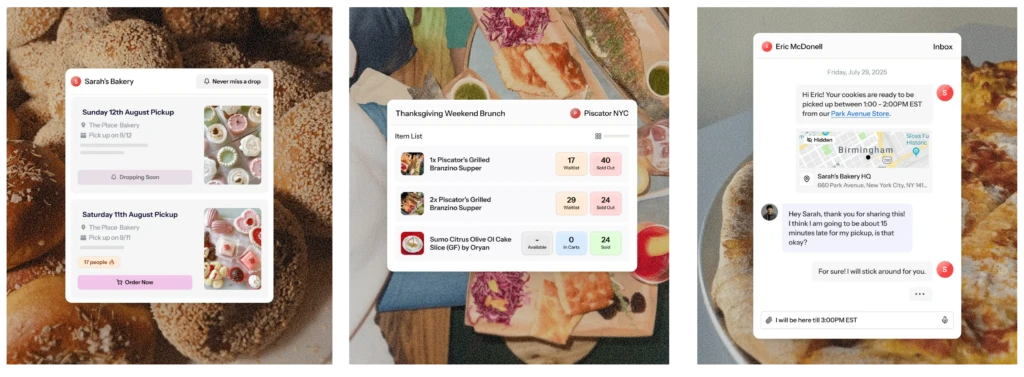
Hotplate was built for the drop model: you announce an opening, customers rush to order in a window, and you make exactly what you sold — no guessing on quantity. It graduated Y Combinator in 2020 and has raised roughly $3 million, which means it has real engineering behind it and the product is polished.
The “free” pricing sounds appealing, but let’s be specific about what it means. On a $40 sourdough order: the customer pays a $2.55 platform fee (5% of $40 + $0.55), which Hotplate charges. You pay $1.46 in payment processing (2.9% + $0.30). Hotplate makes money from customers, not from you directly. Whether customers notice or care varies — some dislike it. About 20% of Hotplate vendors choose to absorb the platform fee themselves, which brings it closer to a 5%+ cost on every sale.
What it does well:
- The drop/preorder UX is genuinely excellent. Waitlists, SMS notifications, sell-out countdowns, and inventory limits are built in.
- Customers can discover you through Hotplate’s platform — there’s a built-in community dimension.
- At high volume with a loyal following, the mechanics can drive incremental sales you wouldn’t otherwise get.
- No monthly commitment if you’re testing it out.
Limitations:
- Built entirely around the drop model. If you sell custom orders, recurring items, or products that don’t fit a “limited release at a specific time” structure — jam, granola, market staples, anything available on demand — Hotplate is the wrong fit.
- Your storefront lives inside Hotplate’s ecosystem. The link you share is a Hotplate link, the checkout experience is Hotplate’s, and the waitlist/notification layer belongs to them. Bakers who want a clean, standalone brand presence often find this frustrating.
- VC-backed businesses change direction. Castiron (another cottage food platform) raised $6M, pivoted, and effectively wound down in 2025 after being acquired. It’s worth knowing where your platform’s incentives lie.
The fee math: Technically $0/month to you, but the platform fee charged to customers is real money leaving the transaction. At $2,000/month in sales with the baker absorbing fees: you’d pay roughly $130–$160/month in combined fees — more than any flat-subscription competitor.
Homegrown
Best for: Farmers market vendors and cottage food sellers with local regulars who want pre-orders and pickup without a learning curve
Cost: $10/month (annual) or $12.50/month. No platform fee, 0% commission, just 2.9% + $0.30 payment processing. 7-day free trial (card required, first charge on day 8, cancel in one click.)
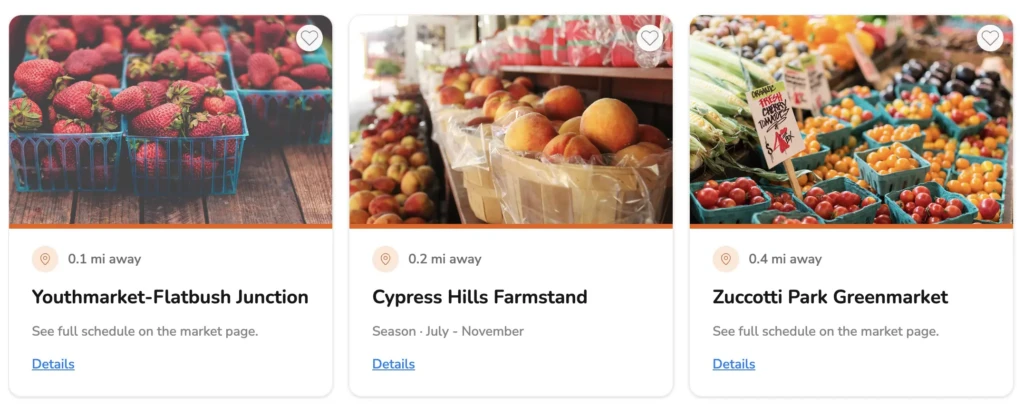
Homegrown is built around pre-orders and pickup windows: customers order and pay ahead by card, you make only what sold, and you show up with a clean pickup list. Pickup can be wherever you actually sell — a market booth, a farmstand, a storefront, or your front porch — and home-based sellers can show shoppers just a neighborhood until an order is placed. You get one link to drop in your Instagram bio, text to regulars, or print on a market card. Setup takes about 15 minutes, and vendors who share their link and start selling typically take their first order within 3–4 days.
What it does well:
- The pre-order-to-pickup flow is the core of the product: orders come in during the week, you hand them off on market day. No chasing Venmo, no digging through DMs.
- Local delivery is a full feature, not a checkbox: set your radius, delivery fee, minimum order, and a cap on deliveries per day, and it plans your delivery route for you.
- Shoppers can message you before they buy — questions land in a Messages tab in your dashboard, so you’re not handing out your phone number.
- The built-in QR code turns a farmstand or market booth into self-serve checkout: customers scan, order, and pay on their phones.
- The marketing legwork is covered — AI helpers for product descriptions, social posts, customer texts, and pricing, plus ready-made “text your regulars,” restock, and pickup-reminder templates.
- Sales tax is calculated and collected at checkout in all 50 states.
- Flat pricing: whether you sell $300 or $2,000 a month, the platform cost is the same $10. You’re also listed in the marketplace directory at no extra cost, though your own link is still what drives orders.
Limitations:
- No hard quantity caps per release yet (a dedicated drops feature is in development) — if a countdown that sells out 30 loaves in an hour is your whole model, Hotplate is purpose-built for that.
- Less depth than MyCustomBakes or Bakesy for fully-custom, back-and-forth quote work like tiered wedding cakes.
- Newer platform with a shorter track record. The reporting and growth features you’d lean on past a few thousand a month are thinner than on older tools.
- Your storefront is a Homegrown link rather than your own domain — though the link opens a standalone page that’s just your shop (with a small “powered by Homegrown” at the bottom), and if you own a domain you can simply forward it to your storefront link.
The fee math: $10/month is about 1% of $1,000 in monthly sales, and the only other cost is the same 2.9% + $0.30 card processing every platform here charges. On a $40 order that’s $1.46 in processing, $0 in platform fees, and the customer pays exactly $40. The cost share only falls as you grow.
Bakesy
Best for: Phone-first bakers who want a professional storefront without building a website
Cost: Standard $9.99/month | Premium $17.99/month. 30-day free trial.
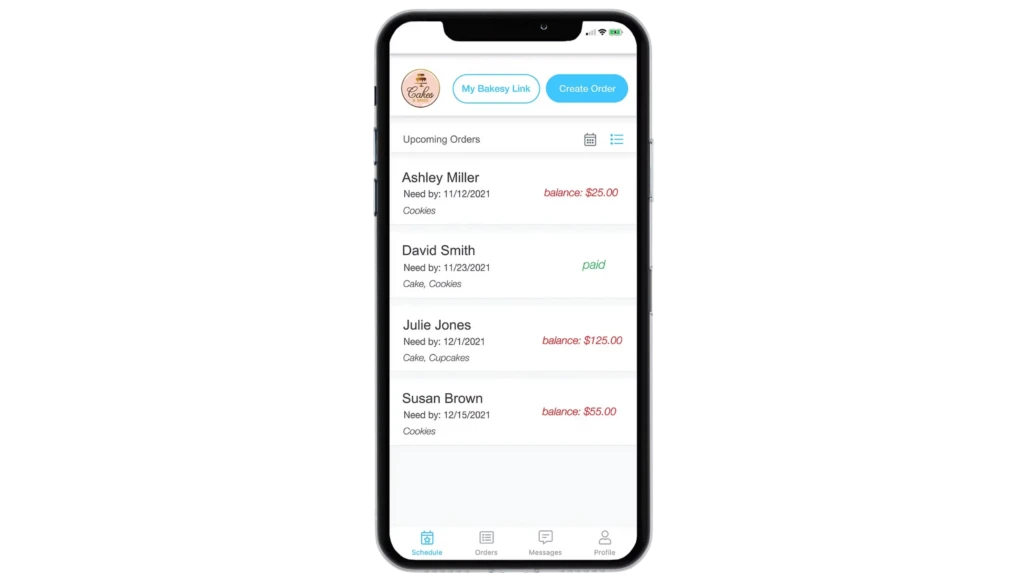
Bakesy is mobile-native in a way other platforms aren’t — it was built as an app first, and that shows in how easy it is to manage everything from your phone. The customer-facing storefront looks polished, which matters when someone finds you through Instagram and clicks a link to order.
Standard includes: website, order forms, branded invoices, availability, automated receipts, customer reviews, QR code, custom domain, and in-app chat.
Premium adds: tips, instant checkout, revenue dashboard, inventory management, automated customer reminders, calendar sync, discount codes, and the ability to hide the Bakesy logo on your shop and invoices.
What it does well:
- Mobile-first design is genuinely convenient if you’re running your business from your phone.
- Customer-facing storefront is attractive and professional out of the box.
- The QR code feature is handy for farmers markets — point people at your phone and they can order.
- Affordable entry point with the Standard tier.
Limitations:
- Payment processing is not fully integrated in the same embedded way as MCB with Square or Hotplate with Stripe — historically, many users collected payments via Venmo, Zelle, or PayPal directly, though “accept all payment methods” is listed as a feature. Verify current payment integration before committing.
- Less depth in the quote/custom order workflow than MyCustomBakes — it’s better for semi-standard orders than fully custom back-and-forth.
- Inventory management and the revenue dashboard are paywalled behind Premium — meaningful features for a growing business are locked at the higher tier.
- The Bakesy branding shows on your shop and invoices at the Standard level, which affects how “your own brand” it feels.
The fee math: $9.99–$17.99/month flat. No transaction fees from Bakesy.
Simply Bread App
Best for: Micro-bakers who bake in batches on scheduled days — especially bread and sourdough
Cost: Percentage-based model with a flexible fee-sharing slider. Promotions offered (e.g., 3 months free). Specific ongoing rates: verify on their website.
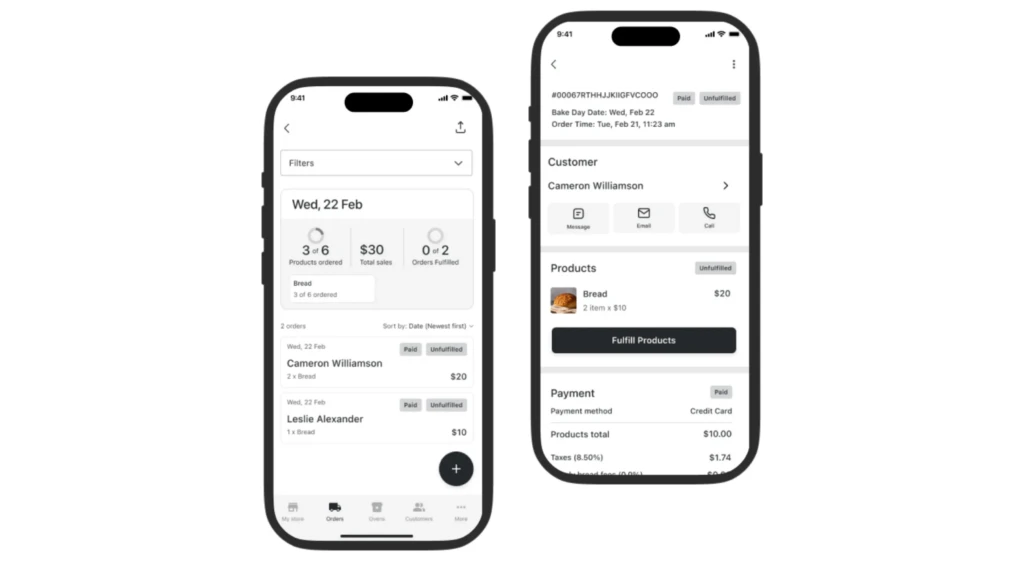
Simply Bread is one of the more interesting platforms because it was built around a very specific insight: most commerce platforms assume your store is always open, but a batch baker doesn’t work that way. You bake specific days, in specific quantities, and everything else is scheduled around that.
What it does well:
- Bake day management is a genuine differentiator. You create a bake day, set what’s available, set quantities, and customers order into that specific window.
- Multiple bake days can be live at once — useful if you’re doing pickups on different days or different locations.
- Automated messaging handles order confirmations and pickup reminders without you touching it.
- Flexible fee structure: a slider lets you decide how much of the platform fee the customer absorbs vs. you absorbing it, with a live preview of how it affects the order total. This gives more control than most platforms.
- Payment methods include Apple Pay, Google Pay, CashApp, and credit card (Stripe) — good coverage.
- Clean, mobile-accessible experience.
Limitations:
- Pricing is percentage-based (platform fee applied per transaction), which can become costly at higher sales volumes compared to flat-subscription competitors. The ability to pass that fee to customers helps, but customers do notice.
- The app is closely tied to the Simply Bread Oven (a hardware product) — the company’s broader product ecosystem is bread-focused. If you’re not a bread baker, some of the platform’s language and community may not feel like home.
- Specific pricing details are not prominently listed on their website — you’ll want to dig into their fee breakdown page or Facebook posts before committing.
- Still growing its community and feature set compared to more established players.
The fee math: Variable — depends on volume and how much of the fee you pass to customers. Run the math at your typical monthly sales before committing.
Can You Use Shopify, Wix, or Square for a Cottage Food Business?
These are the “general purpose” tools people often consider because they’re familiar, widely used, and have good reputations for e-commerce broadly. For a cottage food business, they’re often the wrong tool — but worth understanding why.
What they do well: They’re highly customizable, can scale to very large businesses, and have mature ecosystems with plugins for almost anything. If you’re running a multi-channel food business that’s grown beyond cottage food into wholesale, catering, or retail, a platform like Shopify makes sense.
Why they’re often wrong for cottage food:
- Commerce plans start around $29/month, and you’ll likely need add-on apps for pre-orders, pickup scheduling, or custom order forms — adding another $30–$60/month easily.
- None of them understand your selling model out of the box. “Open 24/7” is the default assumption, not scheduled bake days or quote-based custom orders.
- No built-in concept of cottage food revenue cap tracking, lead times, or quote approval workflows.
- Square integration on Wix has documented syncing issues with inventory.
- The setup time is significant — you’re building, not buying.
The honest answer: if you’re just starting out, the time and cost you’d spend getting Shopify to behave like a cottage food platform is better spent on a platform that already works that way. If you outgrow cottage food tools in a few years, that’s a good problem to have — and you’ll have the sales to justify the upgrade.
The “Free Is Cheaper” Trap
This comes up constantly and it’s worth addressing directly.
Some bakers avoid paid platforms because $10–$18/month sounds like money leaving their pocket. But here’s what you’re actually choosing between:
Free option: DMs, texts, spreadsheets, Venmo. You spend 5+ hours a week on order management, follow-up messages, and manual tracking. At any meaningful wage, that’s $50–$150 in time cost monthly — every month. You also lose orders to friction (customers who wanted to order but couldn’t figure out how), and you lose repeat customers who didn’t get a professional experience.
Percentage-based option (like Hotplate at scale): The “free subscription” platform can quietly cost you $100–$200/month once volume picks up, because the fee runs on every transaction. This doesn’t show up as a line item in your budget — it just shows up as less money per order.
Flat subscription option ($10–$18/month): Predictable, bounded, scales with your volume for free. The platform costs the same whether you do $500 in sales or $5,000.
The real question is: what’s your time worth, and what’s a missed order worth? A platform that books one extra order a month because the checkout was easy pays for itself immediately.

There’s also a stability consideration. Platforms that run on a subscription model have an incentive to make you happy enough to keep paying. Platforms that take a percentage have an incentive to grow your volume — which can be aligned, but also means they’re sensitive to VC funding cycles. Castiron raised $6 million, rebranded as Nourysh, and wound down in 2025. GrazeCart was acquired in 2024. Migrations are painful. Know who you’re building on.
Which Cottage Food Software Is Right for You?
You take custom orders (cakes, cookies, specialty items) → MyCustomBakes. The quote workflow was built for exactly this.
You bake in batches on scheduled days and sell out fast → Hotplate (if you want drop mechanics and discovery) or Simply Bread App (if you want bake day structure and flexible fees).
You sell at farmers’ markets and want something simple that just works → HomeGrown or Bakesy Standard.
You want a beautiful mobile-first storefront and run your business from your phone → Bakesy.
You’re doing both custom orders and pre-orders → MyCustomBakes (the Presale Module handles both).
You’ve outgrown cottage food tools and need multi-channel, wholesale, and scale → Shopify, Square, or a dedicated food ERP. But try to exhaust the cottage-specific tools first.
Ready to move into a shared kitchen? Search for space near you on The Kitchen Door, and use our Kitchen Readiness Checklist to make sure you’re prepared before you sign up.
You’re brand new and not sure yet → Start with a 30-day free trial on MyCustomBakes or Bakesy. Both have them. See which workflow fits how you actually operate, then commit.
One Last Thing
Switching platforms is a pain. Customers get new links, you rebuild your product catalog, order history disappears. Choosing the right platform early — even if it costs $10/month — saves you that headache later.
Think of it less as an expense and more as infrastructure for your business. A carpenter doesn’t complain about the cost of a good saw. A baker shouldn’t have to manage orders out of a Notes app.
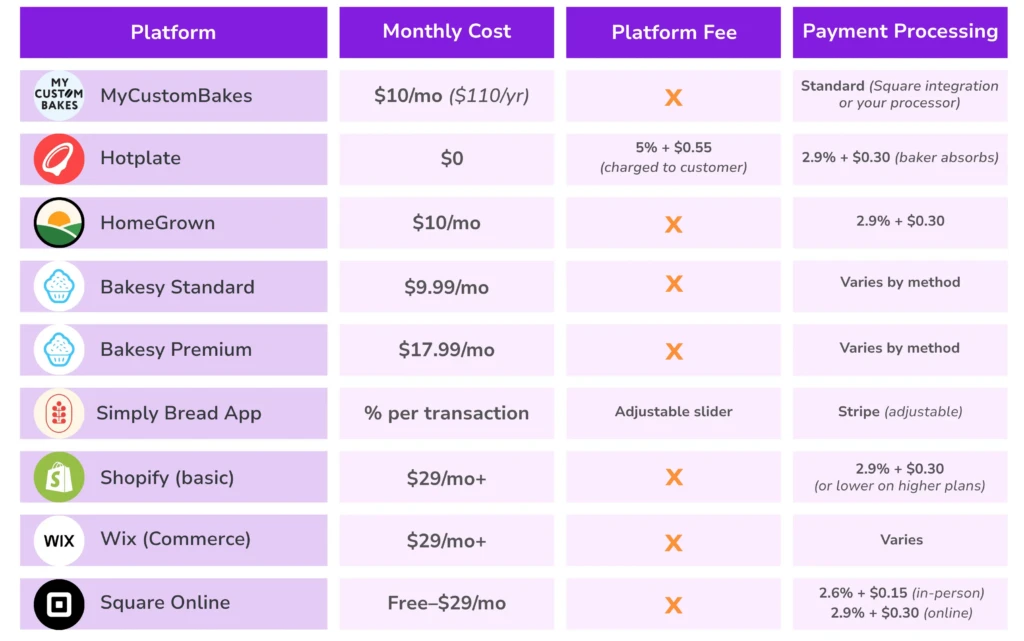
Pricing summary (as of 2024–2026, verify before signing up):
Have a platform you think belongs on this list? Let us know. This space moves fast and community knowledge is the best kind.
The Food Corridor builds software for shared commercial kitchen operators across North America. The Kitchen Door is our free directory connecting food entrepreneurs with licensed kitchen space.