
So, you’re on the search for shared kitchen software and you’ve booked a demo (or a few). Congratulations! That’s a big step.
You’re juggling bookings, billing, compliance paperwork, and a community of food businesses counting on you, and the right software should make all of that lighter. Going in prepared helps you cut through the feature tour and find out whether a platform is truly the right fit for your kitchen. After all, you’re not just choosing software. You’re choosing a team that will be part of your daily operations, your renters’ experience, and your long-term growth.
Whether you’re opening your first commissary kitchen, moving off spreadsheets, or thinking about switching platforms, it pays to look past a polished demo. Some platforms were built for coworking spaces or property management and adapted for kitchens. Others are newer products still building out core functionality. And while many can help you manage existing renters, far fewer help you find new ones.
The best shared kitchen software should help you operate your kitchen AND fill it.
Below are the questions to bring to every demo. The bullet lists are written so you can read them straight to the vendor.
In this guide:
- Who’s behind the software?
- How does the company handle support and software problems?
- Was the software built specifically for shared kitchens?
- How does the platform handle food business compliance?
- Can the software automate your kitchen operations?
- Does the software help you fill your kitchen?
- What is the true cost (and return) of the software?
- Will the company help you become a better operator?
- Will you have access to a community of operators?
- How invested is the company in the industry?
- Can the software grow with your business?
- Can the vendor show you real results?
1. Who’s Behind the Software?
A great demo is one thing. An experienced, dependable team behind the product is another.
Ask the vendor:
- How long has your company been in business?
- How many kitchens actively use your software today?
- How many food businesses use your platform through those kitchens?
- How long has your longest-standing customer been with you?
Why it matters: A company’s experience and customer base tell you a lot about its ability to deliver reliable technology and support over time. A newer company isn’t automatically a bad choice, but you should know who you’re trusting with your business and what risk comes with a less proven tool.
2. How Does the Company Handle Support and Software Problems?
When your reservations, payments, and renters run through software, you need to know what happens when something goes wrong.
Ask the vendor:
- Can I speak directly with a real person when I need help?
- Is support handled by knowledgeable employees, outsourced representatives, or AI chatbots?
- Will I work with a support team that specializes in shared kitchens?
- What are your typical response times?
- Is customer support included in my subscription?
- How do customers report bugs, and who investigates and resolves them?
- How do you prioritize urgent problems that affect my operations?
- How do you communicate outages, bugs, and software updates?
- What testing and quality assurance do you do before releasing new features?
Why it matters: Every platform runs into problems. What separates a dependable partner is how quickly and transparently those problems get resolved. Look for experienced people, clear communication, and real processes behind reliability.
3. Was the Software Built Specifically for Shared Kitchens?
Shared kitchens aren’t coworking spaces with ovens. They juggle food safety, licensing, shared equipment, storage, complex rental arrangements, and dozens of independent food businesses under one roof.
Ask the vendor:
- Was your software originally designed for shared-use commercial kitchens, or adapted from coworking or property management software?
- Which shared kitchen business models does your platform support today?
- Can you walk me through workflows built specifically for commissary kitchens?
- Can I manage hourly rentals, recurring memberships, storage, equipment, and add-on services?
- Can renters reserve specific kitchens, stations, or equipment?
- Can I set booking rules, restrictions, and different pricing structures?
- Can I offer tiered membership plans with different included hours and rates?
- How much customization or manual work will it take to fit my kitchen?
Why it matters: Purpose-built software should already understand how your industry works, so you aren’t stuck building workarounds.
4. How Does the Platform Handle Food Business Compliance?
Compliance is one of an operator’s most important responsibilities, and tracking paperwork for dozens or hundreds of food businesses quickly becomes an administrative burden.
Ask the vendor:
- Can I track permits, licenses, insurance, and other required documents?
- Can I set different compliance requirements for different types of renters?
- Can renters get insurance through the platform?
- Can renters upload and manage their own documents?
- Does the system track expiration dates and send reminders?
- Can I quickly spot missing or expired documents and pull compliance records when I need them?
Why it matters: Generic coworking software may handle memberships and agreements, but shared kitchens need tools built around the compliance realities of food businesses.

5. Can the Software Automate Your Kitchen Operations?
Software shouldn’t swap spreadsheets for more complicated digital chores. It should eliminate administrative work.
Ask the vendor:
- Can you show me the complete renter journey, from inquiry through onboarding, booking, billing, and ongoing management?
- Which of those steps are automated?
- Can new renters be guided through applications, agreements, documents, and insurance before their first booking?
- Can the platform automate reminders, invoices, and recurring tasks?
- How are reservations connected to billing?
- If a renter goes over their plan’s included hours, does the system track and bill the overage automatically?
- Can I apply a one-time fee, bill the same day, or change a billing date?
- Do you integrate with QuickBooks?
- Can I manage multiple locations and staff notifications?
- What will my team still have to do manually?
Why it matters: Every hour spent on repetitive admin is an hour you can’t spend improving operations, supporting renters, or growing the business.
6. Does the Software Help You Fill Your Kitchen, or Just Manage Your Existing Renters?
This may be the most important question in the entire demo.
Most kitchen management software focuses on organizing the renters you already have. But an empty kitchen is lost revenue, and attracting food entrepreneurs matters just as much as managing them once they arrive.
Ask the vendor:
- Does your platform help potential renters discover my kitchen?
- Do you operate a marketplace specifically for commercial kitchen rentals?
- Can your company generate qualified rental inquiries for my kitchen?
- Can I add your intake form to my own website?
- Can I manage leads and convert prospects into paying renters?
- How does your platform support kitchen marketing and customer acquisition?
- Can you show me how your software helps increase bookings and utilization?
- Do you provide visibility into the leads or revenue generated through your platform?
Why it matters: Saving time matters. Filling your calendar matters more.
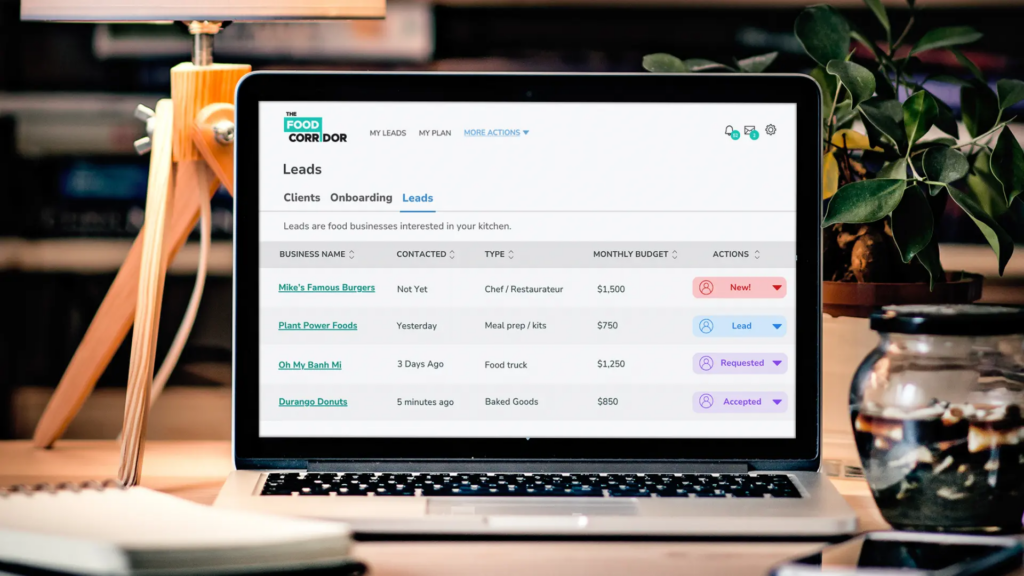
At The Food Corridor, we believe technology should help operators run their kitchens and fill them. That’s why The Food Corridor works alongside The Kitchen Door, a marketplace that connects food entrepreneurs searching for commercial kitchen space with operators who have space available. Inquiries flow straight into The Food Corridor’s Leads Manager, so operators can respond, qualify, and onboard new renters in one place. Together, they cover both sides of the business: attracting prospective renters, then managing operations once those renters become customers.
Want to see how it works in practice? Here’s how kitchens turn leads into paying clients with The Food Corridor.

7. What Is the True Cost (and Return) of the Software?
Subscription prices are easy to compare. But the lowest monthly price rarely delivers the most value, so evaluate both total cost and the return the platform can create.
Ask the vendor:
- What are the monthly subscription fees?
- What payment processing and platform fees apply?
- Can I choose which payment methods to accept?
- Can I decide whether to absorb fees or pass them on to renters?
- Are onboarding, training, support, and software updates included?
- How much administrative time could your software save my team?
- Can your platform help me generate new leads, bookings, and rental revenue?
- How can I measure the return on my investment?
Why it matters: The real cost of software is more than its subscription fee. Factor in the time your team saves, the admin work eliminated, the revenue opportunities created, and the problems avoided. A platform that brings in bookings while cutting administrative costs can more than pay for itself.
For a transparent example of shared kitchen software pricing, see The Food Corridor’s plans and fees.
Don’t just ask what the software costs. Ask what value it creates.
8. Will the Company Help You Become a Better Kitchen Operator?
Running a successful shared kitchen takes specialized knowledge that goes far beyond scheduling and billing: business models, pricing, regulations, facility management, renter relationships, and financial sustainability.
Ask the vendor:
- Do you provide educational resources specifically for shared kitchen operators?
- Do you offer webinars, training, templates, guides, or industry research?
- Can you help me learn best practices for pricing, utilization, and profitability?
- Do you offer one-on-one guidance or consulting for operators?
- Do you offer resources or discounts for my food businesses, not just for me?
- Are your resources built by people who understand shared kitchen operations?
- What resources are available beyond the software itself?
Why it matters: The right partner helps you become a more knowledgeable, more successful operator, not just a user of their app.
A good place to start: the Shared Kitchen Toolkit and other operator resources from The Food Corridor.
9. Will You Have Access to a Community of Other Kitchen Operators?
Shared kitchen operators face challenges that are hard to solve alone, and learning from people who’ve already been through them is invaluable.
Ask the vendor:
- Do you facilitate an active community of shared kitchen operators?
- Can I connect with other operators to swap ideas and best practices?
- Can I learn from operators with business models similar to mine?
- Do you organize industry events, educational gatherings, or networking opportunities?
Why it matters: A network of experienced peers helps you solve problems, avoid mistakes, and spot opportunities. A software subscription gives you a tool. An industry community gives you collective experience.
10. How Invested Is the Company in the Shared Kitchen Industry?


There’s a difference between a company that sells software to shared kitchens and one that’s invested in helping the industry succeed.
Ask the vendor:
- What contributions has your company made to the shared kitchen industry?
- Do you invest in education, research, partnerships, or industry events?
- How do you engage with shared kitchen operators and food entrepreneurs?
- How does operator feedback shape your product development?
- What is your long-term vision for supporting shared kitchens?
Why it matters: Shared kitchens are a specialized, evolving industry. A company deeply connected to it is better positioned to anticipate operator needs and build solutions that actually fit.
11. Can the Software Grow With Your Business?
Your kitchen’s needs today may look very different in three or five years.
Ask the vendor:
- Can the platform support multiple locations?
- Can I add new rental models, services, and pricing structures?
- Can it handle a growing number of renters and reservations?
- Can I assign different permission levels to team members?
- What reporting and business insights are available?
- Can I export my data if I decide to leave?
- Will I eventually outgrow your software?
Why it matters: Switching platforms is costly and disruptive. Choose one that supports both your current operations and your future plans.
12. Can the Vendor Show You Real Results?
A demo shows what software is designed to do. Existing customers show how it performs in the real world.
Ask the vendor:
- Can you share examples of kitchens similar to mine using your software?
- Can I speak directly with current customers?
- What measurable time savings have operators seen?
- Can you share examples of improved utilization, bookings, or growth?
- What challenges have customers run into during implementation?
- What have you improved based on customer feedback?
- Can you show me the features I need in the live product today, rather than on a roadmap?
Why it matters: Roadmaps and polished presentations are helpful, but proven performance and real customer experience are a much stronger basis for a decision this important.
See real results from shared kitchens using The Food Corridor, including how Clarence Creative Kitchen grew from about 7 long-term renters to more than 30 active users.
What’s the Bottom Line When Choosing Shared Kitchen Software?
Don’t just manage your kitchen. Grow it.
It’s easy to get absorbed in dashboards, calendars, feature lists, and subscription prices. But the questions that matter most go deeper: Who’s behind the technology? Will they support you when something breaks? Does the software truly understand shared kitchens? Can it help you attract renters, generate revenue, and become a better operator?
And most importantly: Are you buying a tool to manage the business you already have, or investing in a platform that helps you build the business you want?
The Food Corridor team (you might know us as the Gnomes) has spent more than a decade working alongside shared kitchen operators and food entrepreneurs. Today, The Food Corridor supports more than 500 kitchens and the 15,000+ food businesses that rent from them across the United States and Canada.
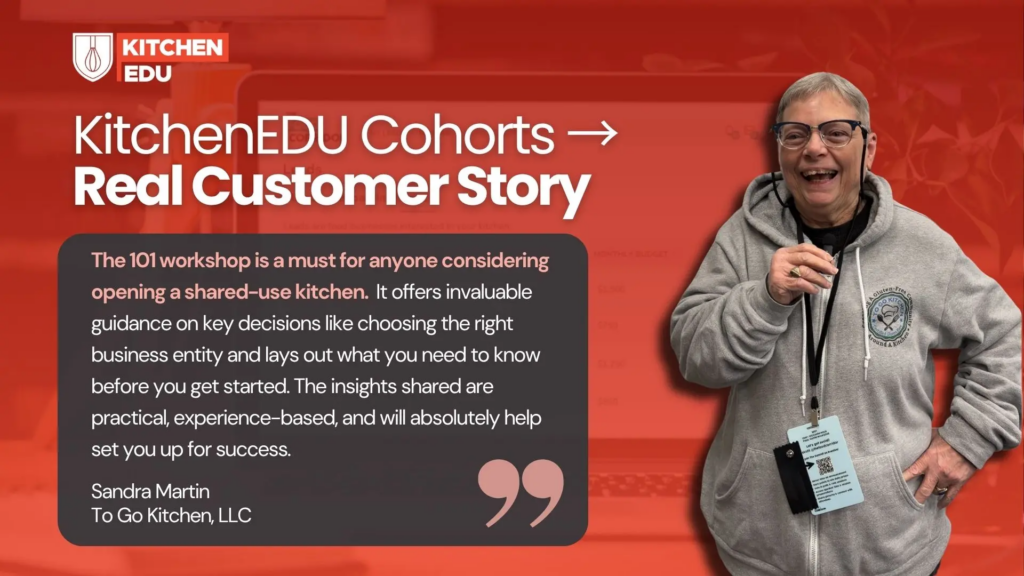
Our mission is to enable efficiency, growth, and innovation in local food. That’s why working with us means far more than software. You get a peer community in The NICK (the Network for Incubator and Commissary Kitchens), the Shared Kitchen Summit, operator education through KitchenEDU, expert connections through the Consulting Circle, and recognition for outstanding kitchens and their teams through the Golden Whisk Awards. Your renters get vetted partners and exclusive discounts through the Food Business Marketplace. And The Kitchen Door connects you with food entrepreneurs looking for kitchen space.
Shared kitchens are the heartbeat of local food systems. Our job is to do the heavy lifting behind the scenes so you can be the hero of yours.
The right technology should help you operate your kitchen, fill your kitchen, and grow your business. Let’s get cooking.
Book a demo | Explore The Food Corridor | Discover The Kitchen Door
Frequently Asked Questions
What questions should I ask in a shared kitchen software demo? Ask who’s behind the software, how support works, whether it was built for shared kitchens, how it handles compliance and billing automation, what it truly costs, and whether it helps you find new renters. Then ask to speak with current customers.
Can shared kitchen software help me find new renters? Some can. Look for a platform connected to a kitchen rental marketplace, an intake form you can embed on your own website, and lead management tools that help turn inquiries into paying renters.
How do I compare the cost of shared kitchen software? Look beyond the monthly subscription. Compare payment processing and platform fees, whether you can pass fees on to renters, what’s included in onboarding and support, and how much admin time and new revenue the platform can realistically deliver.
What should I ask about customer support? Ask whether you can reach a real person, who handles support, typical response times, how bugs are reported and resolved, and how outages and updates are communicated.
What features should shared kitchen software include? For a full breakdown of what kitchen-specific software should cover and how it compares to generic tools, see our guide to choosing the best shared kitchen management software.