This year was about one thing: Helping you be the hero for the food entrepreneurs in your community.
When you provide our team with feedback, we listen. And then act. Below are all the gifts you unwrapped from The Food Corridor in 2025, plus a look ahead at what is to come in 2026.
- 🧲 Leads Manager
- 🛡️ Listing Boosts and Badges
- 📝 Embeddable Renter Intake Form
- 💸 Bill Overage Hours automatically
- 🎓 KitchenEDU operator hub
- 📙 Updated 2025 Shared Kitchen Toolkit + Operations Manual
- 🤝 Technical assistance to the northwest Rocky Mountain region
- 🎸 2025 Shared Kitchen Summit
- 🔮 A Peek into 2026
1. 🧲 Leads Manager
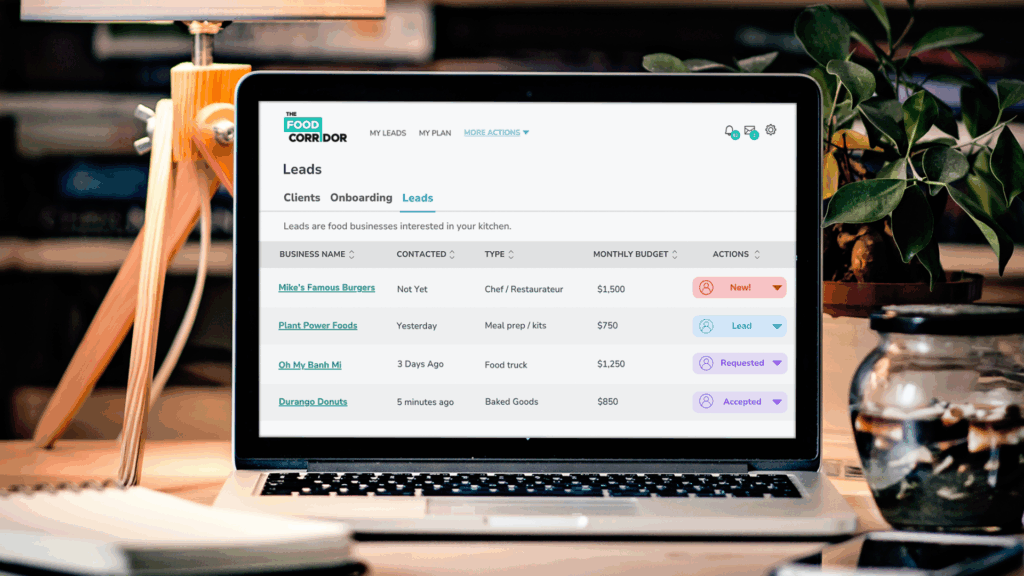 Meet Leads Manager, your new centralized home for every inquiry.
Kitchens told us one of their biggest challenges was keeping leads organized. Operators often have emails in one place, DMs in another, form submissions somewhere else, and a fear of letting a great prospect slip through the cracks.
How does Leads Manager solve this?
-
Brings every inquiry from The Kitchen Door and beyond into one place
-
Uses clear statuses so you instantly know who is new, invited, or waiting on follow-up
-
Provides templates so you respond faster and more consistently
What results are kitchens already seeing?
-
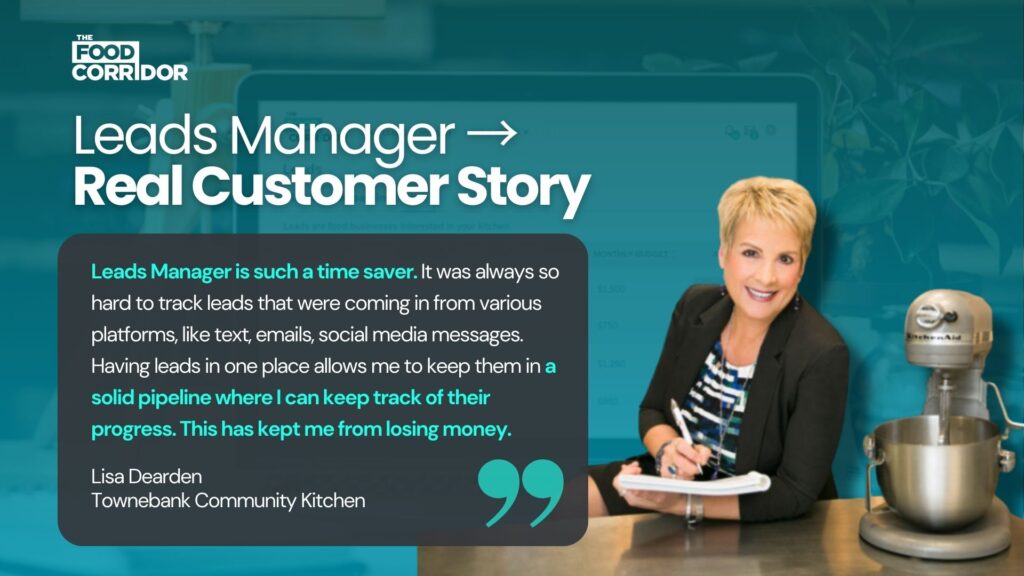
Converting leads at an average rate of 46% (5–9x higher than industry norms!)
-
1 in 4 kitchens are converting 100% of their qualified leads
👉 Learn more about Leads Manager
2. 🛡️ Listing Boosts and Badges
Operators also told us getting visibility on The Kitchen Door was competitive, especially in regions with many shared kitchens. So we realized, you needed a way to shine in search and attract renters who are truly the right fit.
Listing Boosts gives your kitchen the opportunity for more visibility on The Kitchen Door. Show up higher in search results and bring in renters who match what your kitchen offers.
Boosts include:
-
Spotlight Badges on your listing and in search
-
Listing Highlights on your first photo for paid Food Corridor kitchens
-
New and Last Active labels that show renters you are responsive
- New Metrics for interest, engagement, and renter conversions

More badges mean higher placement in search. Higher placement often means more eyes, more trust, and more qualified inquiries for your shared commercial kitchen.
👉 Learn more about Listing Boosts.
3. 📝 Embeddable Renter Intake Form
Many kitchens told us their websites were getting traffic, but not converting visitors. Without a comprehensive, but simple intake form, renters bounced or sent incomplete info through random channels.
How does embedding solve this?
-
Turns your website into a lead magnet! Visitors now submit inquiries right on your site
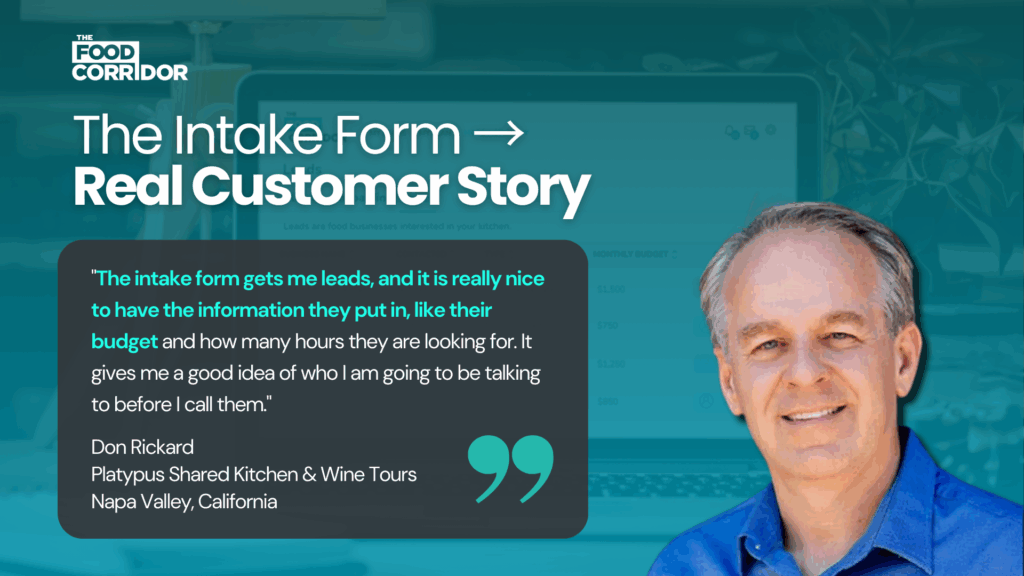
- The Intake Form gathers all the critical screening information you need to qualify a new lead, including Business type, business stage, budget, and the number of hours they will need to rent space each week
-
Whether the food business found you through The Kitchen Door or organically online, when you embed your TKD intake form on your website, all your leads flow into your Leads Manager, keeping everything in one place
Pro tip: Add your Intake Form link to your email signature, Instagram bio, and DMs to capture every inquiry.
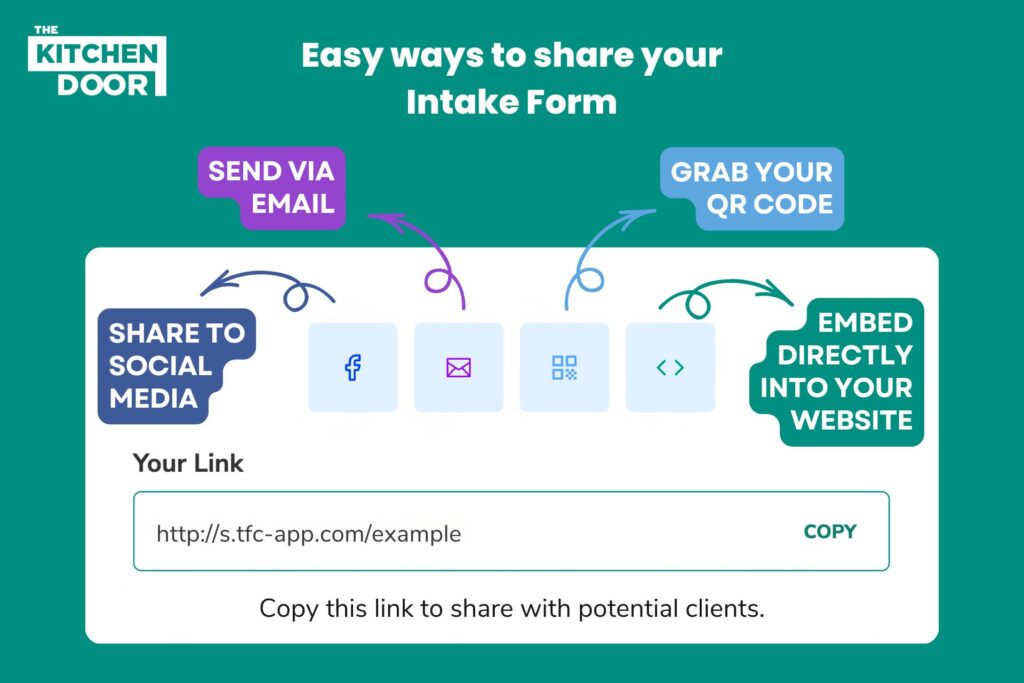
👉 Instructions on how to embed your code here
4. 💸 Bill overage hours automatically
Kitchens repeatedly told us renters were sometimes surprised by large overage bills that hit at the end of the month, and those surprises often led to failed payments.

In fact, one of the top requests we heard from kitchens using The Food Corridor is the ability to bill overage hours as they happen, rather than waiting for the renter’s next monthly bill. So we made it happen 💅.
You can now bill overage hours instantly, on the same day they are used. This update brings meaningful benefits to both kitchens and their tenants:
- Faster cash flow: Collect overage revenue right away
- Fewer failed payments: Avoid big surprise bills renters can’t afford
- Revenue protection: Get paid even if a client ghosts or leaves early
- Easier budgeting: Offer renters smaller, more predictable bills
Watch How Overage as Hourly Works:
5. 🎓 Level up as an operator with KitchenEDU
You told us you needed a space to learn from other operators, strengthen operations, and stay ahead of industry shifts.
Kitchen EDU brings together workshops, workbooks, templates, expert talks, cohort learning, and operator stories in one place. You can now explore practical lessons on topics such as onboarding tenants, pricing for profit, improving utilization, and keeping compliance simple.
Kitchen EDU is more than education. It is community in motion. It connects operators who want to share what works, learn what is next, and build a stronger future for their kitchen and food entrepreneurs.
6. 📙 2025 Shared Kitchen Toolkit + Operations Manual
This year, we released a refreshed, research-backed Shared Kitchen Toolkit 2.0 to support planning, operations, and growth. It includes data from more than 250 operators, new info on pricing models, market research, financial planning, facility design, and member management, plus case studies and NICK Nuggets from the field.
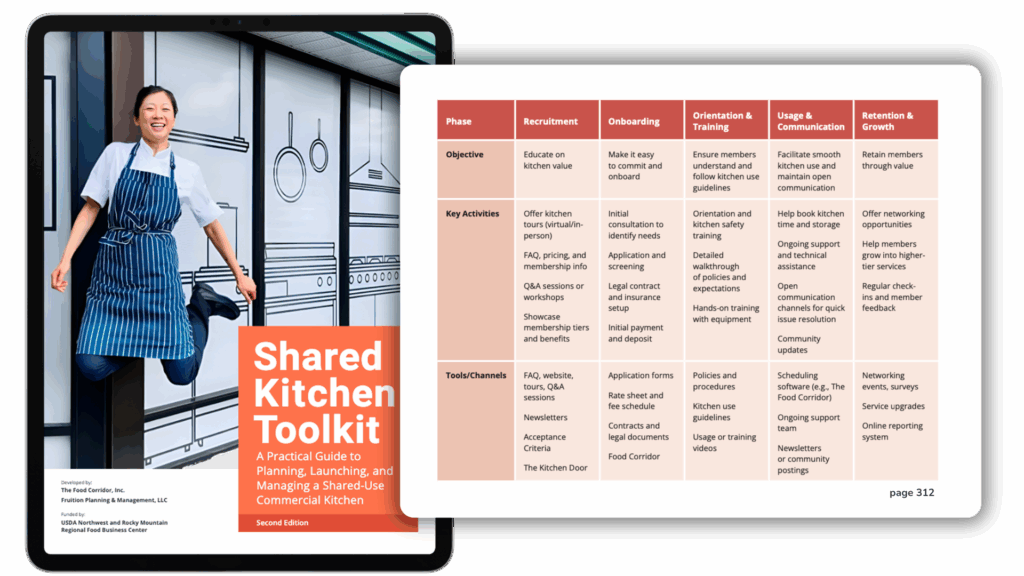
Ready to master the fundamentals of running a shared kitchen? Purchase the Toolkit by December 31st to enroll in our virtual Shared Kitchen 101 Cohort.
👉 Learn more.
This year, we also released the revised Operations Manual to strengthen compliance and improve kitchen operations. It’s your complete, FDA-aligned, plug-and-play resource.
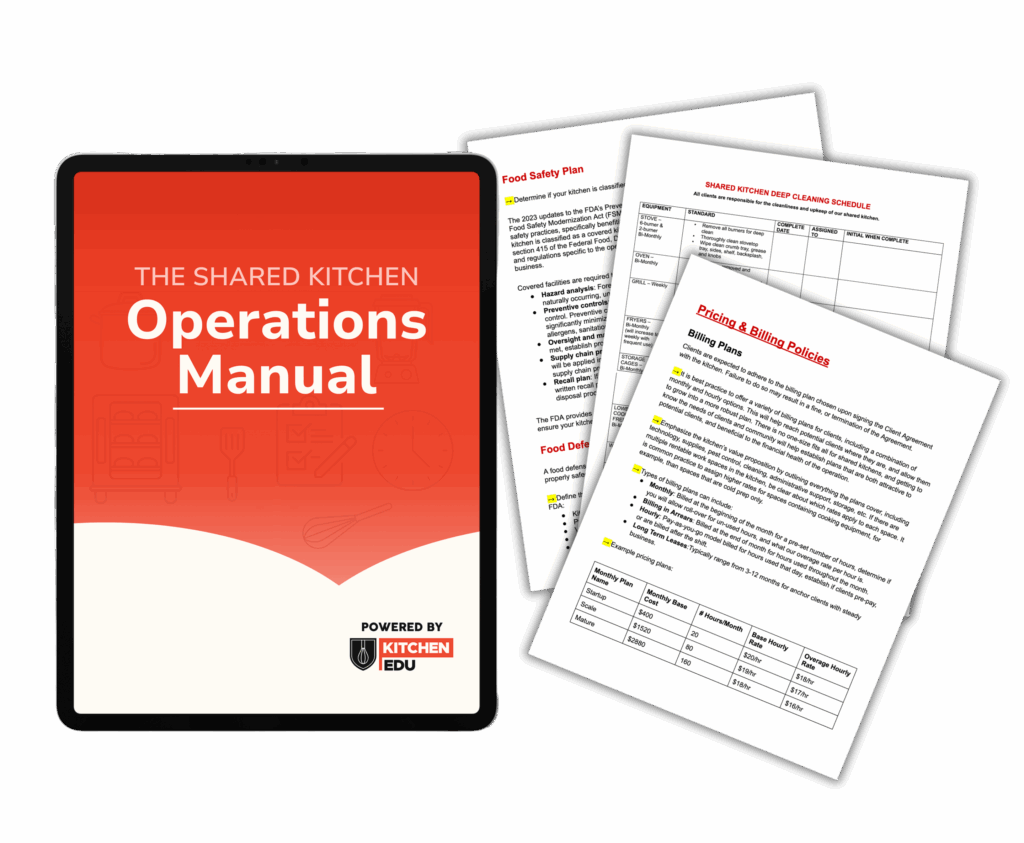
The recently updated Operations Manual gives you everything you need to stay prepared and protected. With new templates, expanded policy sections, and a complete kitchen team member handbook, you’ll minimize health department violations, avoid legal issues, reduce mismanagement, and unlock smoother, more efficient, and more profitable operational procedures.
See what’s new:
Want to work through how to implement the Operations Manual in your kitchen alongside fellow operators? Purchase the Operations Manual by February 25th to join the virtual Ops Manual Cohort in March. 👉 Learn more.

8. 🎸 2025 Shared Kitchen Summit rocked

In November, we gathered in Cleveland for the 2025 Shared Kitchen Summit, where operators gained practical tools, fresh insights, and real-world guidance to improve the efficiency and impact of their kitchen operations.
Over three days, attendees toured working shared kitchens, joined targeted sessions led by industry experts, and connected with peers facing similar opportunities and challenges. The Summit also featured our second annual Golden Whisk Awards, an inspiring celebration of leadership and innovation in shared kitchen management, at the Rock & Roll Hall of Fame. From actionable takeaways to a strong sense of community, the Summit empowered operators to elevate how they run their facilities.
👉 Get all the details of the year’s summit in our CEO, Ashley Colpaart’s recap.
9. 🔮 What’s in store for Shared Kitchens in 2026?
This year’s product updates weren’t random additions. They reflect how the shared-use kitchen industry is evolving and what operators will need in the next 2–3 years.
Shared kitchens are no longer simply places to rent space.
They are increasingly:
• The operational backbone of local food systems
More communities rely on shared kitchens to support bakers, food trucks, caterers, meal-prep companies, and CPG startups. This means operators need stronger tools for scheduling, billing, compliance, and growth. And ways to communicate the role and impact through reporting features.
• Gateways for workforce development and entrepreneurship
A kitchen’s efficiency directly impacts the success of dozens of businesses.
Tools like Leads Manager, reporting upgrades, and Intake Forms ensure operators can spend less time chasing admin and more time supporting the next wave of food entrepreneurs. 2026 will explore new ways to support food entrepreneurs with THEIR businesses.
• Data-powered small business hubs
The future of shared kitchens requires clearer insights: Who is growing? Who is underutilizing space? What revenue streams are emerging? Our roadmap moves toward richer reporting, visual dashboards, and smarter scheduling that help kitchens run more intentionally. Additionally, we will move to phase 2 of our food entrepreneurs survey.
• AI is accelerating the rise of small, human-centric, niche communities.
Across industries, AI is automating repetitive work, freeing people to invest their energy in connection, creativity, mentorship, and community.
As a result:
-
People crave smaller, specialized, value-driven communities
-
Networks are forming around deep expertise, not broad generalization
-
Operators and entrepreneurs want peer learning, trusted sources, and human guidance
Shared kitchens are perfectly positioned to thrive in this shift. And we are leaning into the human side with more cohorts, learning groups, and events, while exploring how we can leverage AI as a community. Think a Shared Kitchen Operator Agent or Toolkit GPT! 🤔
And so, thank you from our team.
Thank you for fueling local food systems and building thriving kitchen communities. Thank you for continuing to provide us with the feedback to build the features and the future you want to see. We are so proud to be on your team and are excited to see what is in store for 2026.
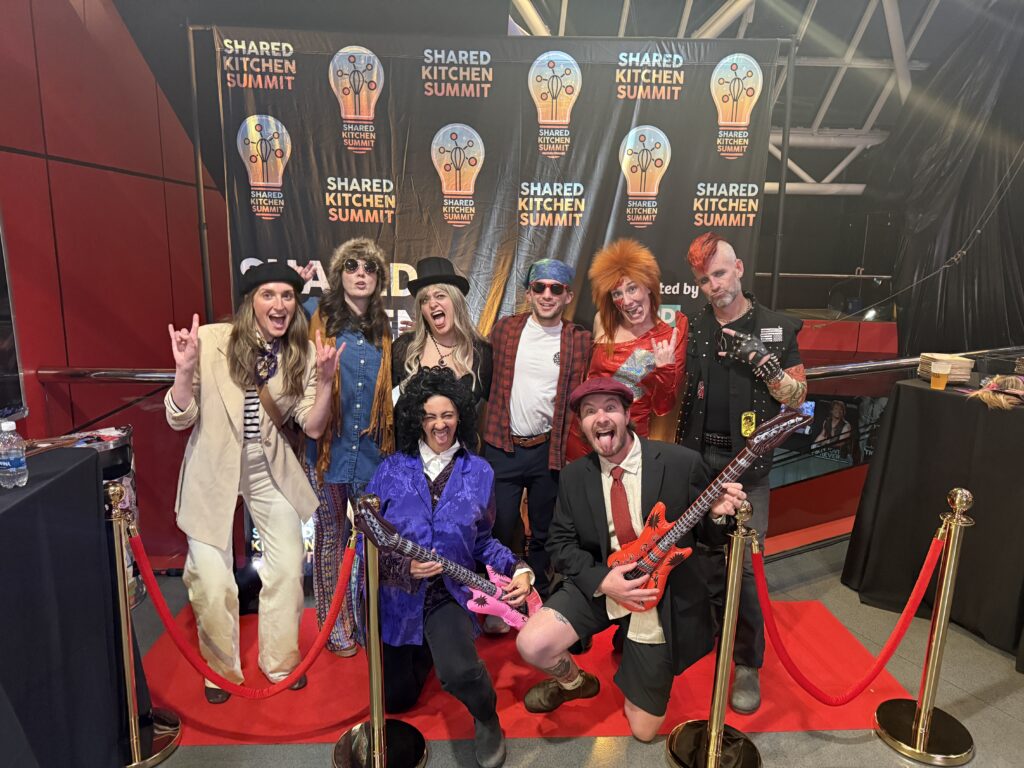
The Rock and Roll Hall of Fame
Cleveland, Ohio
– The Food Corridor Team