Eleven years ago, I set out to solve a problem. But it wasn’t originally a software problem.
It was a food systems problem.
While earning my PhD in Food Systems at Colorado State University, I was researching how to build more connected, efficient, and sustainable local food systems. My work focused on identifying opportunities to connect different parts of the food economy to unlock resources, reduce barriers, and support entrepreneurship.
One opportunity stood out.
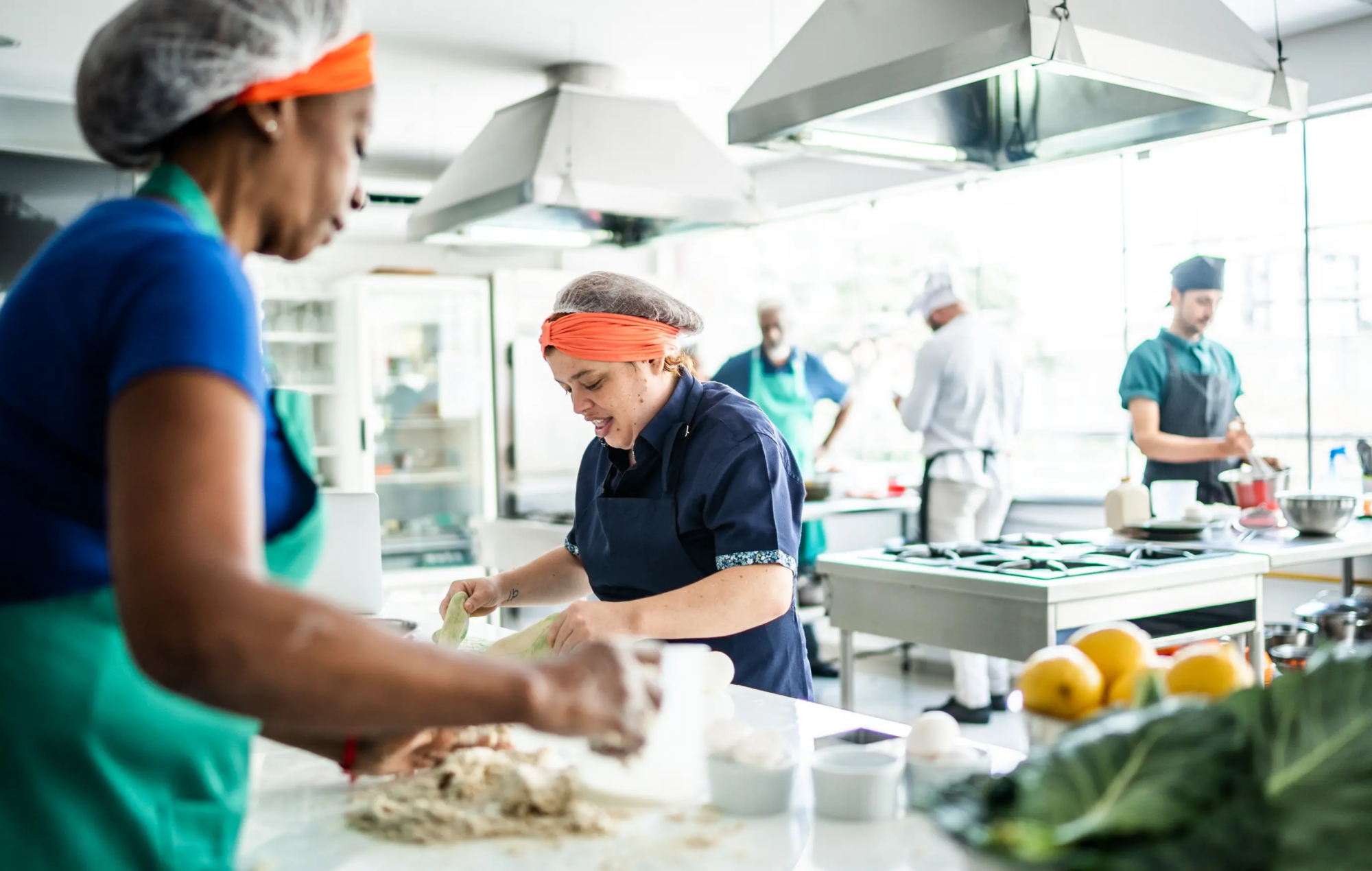
Across the country, commercial kitchens had valuable infrastructure sitting underutilized, while food entrepreneurs struggled to find affordable, licensed space to start and grow their businesses.
The kitchens existed. The entrepreneurs existed. But the connections and systems needed to bring them together were often missing.
What if we could connect the two?
That question eventually became The Food Corridor.
With a handful of pioneering shared kitchen operators willing to take a chance on a new idea, we started building technology designed specifically for this emerging industry.
Our mission was simple then, and it remains the same today:
To enable efficiency, growth, and innovation in local food.
Eleven years later, The Food Corridor powers more than 500 kitchens and supports over 15,000 food entrepreneurs across the United States and Canada.
But what we’ve built together is much bigger than software.
Shared Kitchens Are the Heart of Local Food Systems
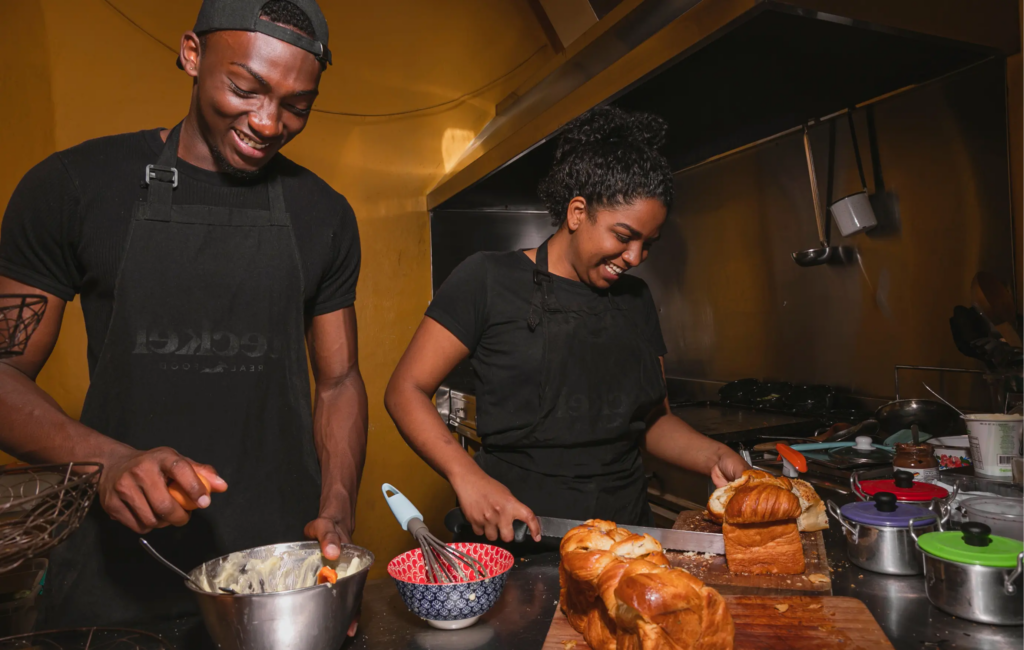
I’ve always believed that the shared-use commercial kitchen is the heart of the local food system.
These facilities are where food entrepreneurs take their first steps, test new products, grow businesses, create jobs, and bring new food innovations to their communities.
They make entrepreneurship more accessible by allowing food businesses to share the costs of expensive commercial infrastructure rather than investing in their own facilities before they’re ready.
And they transform existing commercial kitchen space into productive community assets.
When you’re part of The Food Corridor, you’re not simply a software customer.
You’re part of an empowered network of shared kitchens and food entrepreneurs strengthening local food systems across North America.
That network has become one of our greatest collective assets.
Through years of surveys, research, customer discovery, and the operational insights shared by kitchen operators, we’ve been able to better understand and communicate the impact of this industry.
That work has helped elevate recognition of shared-use commercial kitchens and incubators within regional food system development conversations, including with USDA Agricultural Marketing Service (AMS).
Shared kitchens and incubators have been identified within initiatives such as the Regional Food Business Centers’ Business Builder programs as important infrastructure supporting local food entrepreneurship and economic development.
This matters because shared kitchens have historically been overlooked in discussions about food infrastructure, even though they play an essential role in helping food businesses enter and grow within the marketplace.
I continue conducting research because I believe deeply in the power of shared kitchens as conduits for local food innovation, entrepreneurship, and community economic development.
And I believe that when we work together, our collective impact is far greater than what any one kitchen—or software company—could accomplish alone.
We’re a Small Business Building Technology for Small Businesses
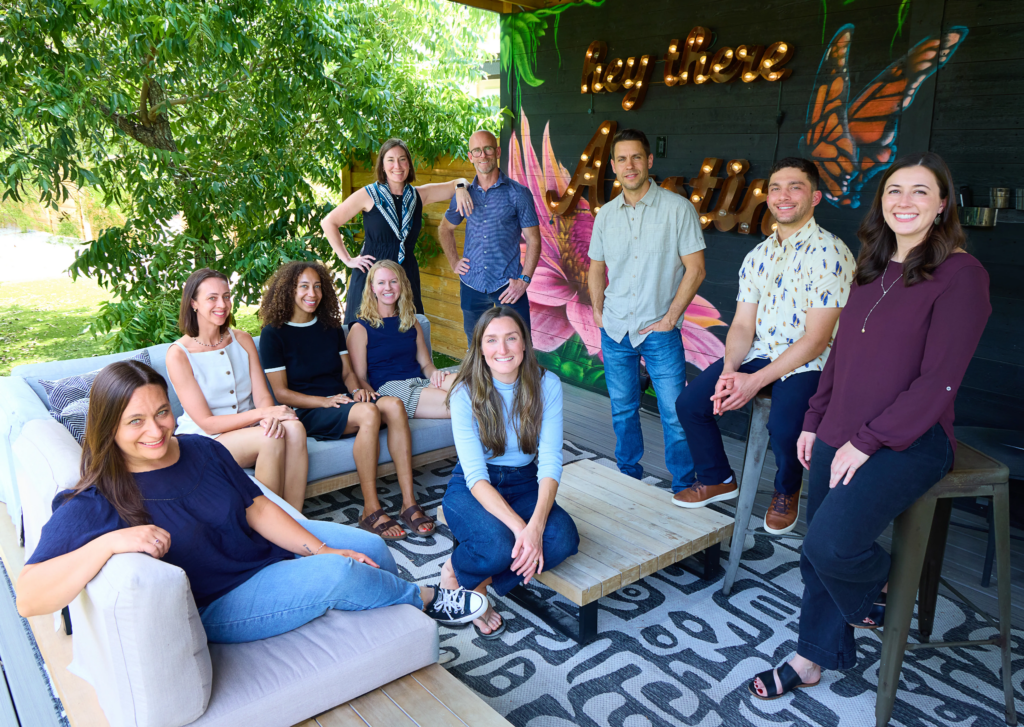
The Food Corridor is an independent, women-owned and operated software company.
We’re self-funded and customer-funded, with a team of approximately 15 people.
We provide our employees with benefits and 401(k) retirement plans. We employ specialized professionals who understand the unique challenges of shared kitchen operations.
We have a full development team focused on maintaining, improving, and expanding the software. We invest in customer support, technology infrastructure, security, research, and industry education.
And we’re committed to building a sustainable company that can continue serving this industry for the long term.
We’re not backed by a massive private equity firm. We don’t have the transaction volume or economies of scale of large technology companies serving millions of businesses.
But we have something valuable: more than a decade of specialized knowledge, relationships, and experience in one very specific industry.
Our customers understand this dynamic because they live it themselves.
An independent bakery can’t necessarily compete with a national grocery chain on price. A local restaurant can’t always match the purchasing power of a large franchise.
But customers choose independent businesses because they value the quality, specialization, service, and relationships those businesses provide.
The same economics apply to specialized software.
When you choose The Food Corridor, you’re supporting an independent company that reinvests in the people, technology, and services that support your kitchen.
We Didn’t Build a Generic App. We Built Software Around Your Industry.
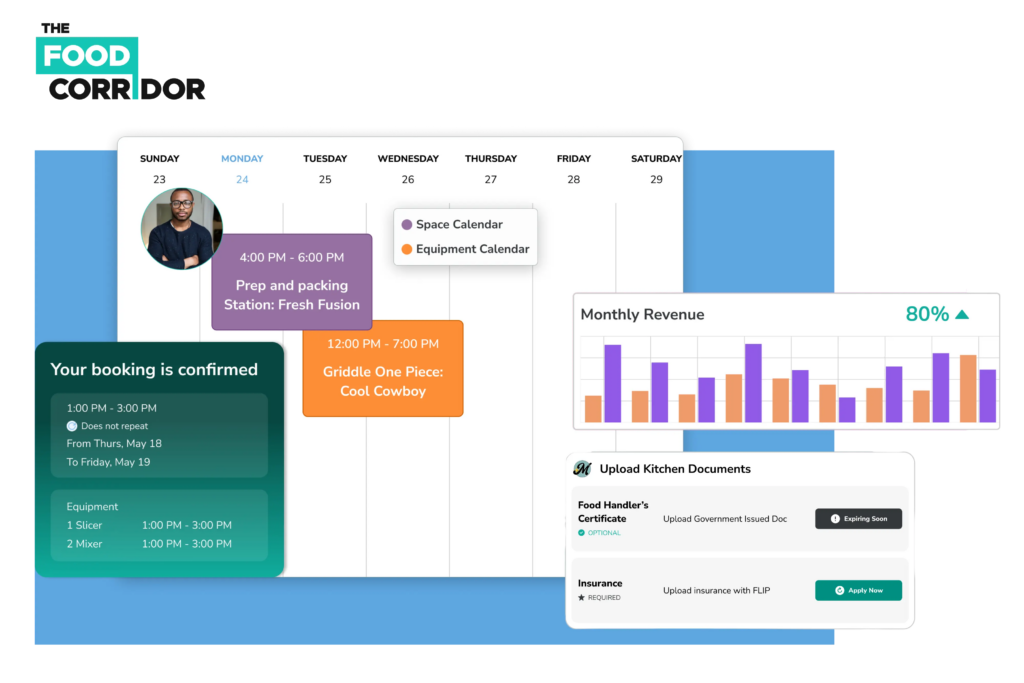
The Food Corridor wasn’t a generic booking tool retrofitted for commercial kitchens.
It was purpose-built around the operational realities of shared-use kitchens.
Over the years, we’ve conducted industry surveys, interviewed operators, studied workflows, and continually incorporated customer feedback into our development priorities.
We built around the needs of the industry, recognizing that while no two kitchens operate exactly alike, many share common challenges.
Scheduling multiple spaces. Managing renter onboarding and compliance. Collecting payments. Keeping track of documents. Coordinating bookings. Communicating with food businesses.
We wanted to bring those functions together into a system designed for how shared kitchens actually operate.
And we’re still building.
Software as a service means more than access to an app.
It means having a team continuously monitoring performance, addressing bugs, maintaining security, developing new features, and supporting customers when they need help.
Behind our software are real people with specialized knowledge of this industry.
We believe technology, including AI, can make our team more effective. But we’re not replacing our commitment to knowledgeable, accountable human support with automated agents running the show.
Our software is the product. The people and ongoing service behind it are part of the value.
We Don’t Just Help You Manage Your Kitchen. We Help You Fill It.
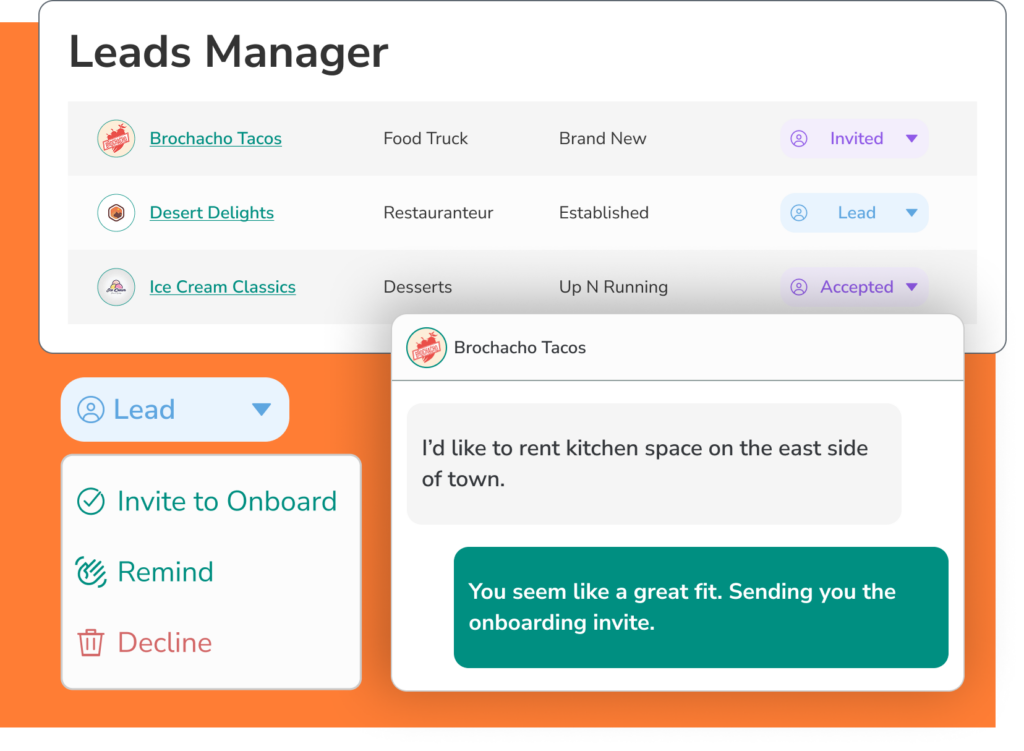
This is one of the most important distinctions in our business model.
We designed The Food Corridor around shared success.
When a kitchen attracts more renters, increases bookings, improves utilization, and generates more revenue from its existing infrastructure, that’s good for the operator and good for our business.
An empty kitchen represents missed opportunity.
Every unused hour, vacant workstation, or underutilized production space represents potential revenue from an asset you’ve already invested in.
Our goal is to help you capture more of that value.
Through our connection with The Kitchen Door, we help connect shared kitchen operators with food entrepreneurs actively searching for commercial kitchen space.
We invest heavily in search engine visibility, working to rank for the keywords food entrepreneurs use when looking for their first commercial kitchen or their next place to grow.
That investment helps create a marketplace where food businesses can discover available facilities and kitchen operators can receive qualified leads.
We’re investing in demand generation, not simply scheduling.
And once those leads become customers, our software helps operators manage onboarding, bookings, billing, payments, and ongoing operations.
The result is a more connected process from initial discovery through long-term renter relationships.
Our Goal Is for the Platform to More Than Pay for Itself
We believe good software shouldn’t just cost money.
It should help you make money, save money, and create opportunities to grow.
Think about the potential value of a few additional renters, more bookings during otherwise unused kitchen hours, and less time spent on administrative tasks.
Through The Kitchen Door, we work to generate incremental business opportunities.
Through The Food Corridor, we help automate time-consuming processes like scheduling, invoicing, payment collection, onboarding, and renter management.
That means less time chasing invoices, coordinating calendars, following up on paperwork, and managing repetitive administrative work.
It’s time you can spend serving customers, developing new revenue opportunities, or growing your business.
Our goal is simple: the incremental business we help generate, combined with the time and administrative costs we help save, should more than pay for the platform itself. Ideally, many times over.
Of course, every kitchen’s operations and results are different.
But we believe the most useful question isn’t simply, “What does this software cost?”
It’s:
“What does this software help my kitchen earn, save, and accomplish?”
That’s the return on investment we want operators to evaluate.
Let’s Talk About Fees. Really.
Nobody loves fees. We don’t either.
But fees are a necessary reality of operating a sustainable business, whether you’re running a commercial kitchen or building the technology that supports one.
And we believe our customers deserve to understand exactly what they’re paying for.
We’ve intentionally structured The Food Corridor’s pricing around two components:
Our software subscriptions cover the fixed costs of running our business. Our platform fees cover the variable costs of delivering and scaling our service.
Our platform fee isn’t a credit card surcharge.
It’s an operational fee that covers transaction management, payment processing, software maintenance, security, and backend merchant costs, including Stripe processing.
And importantly, it supports unlimited core operations, including food business clients, calendars, bookings, and digital file storage.
We don’t want to penalize your growth by charging you more every time you add another renter, create another booking, or upload another document.
As your kitchen grows, the infrastructure required to support your operations grows too.
Our pricing helps us continue delivering a reliable service as that happens.
Why We Built Automated Payments Into the Platform
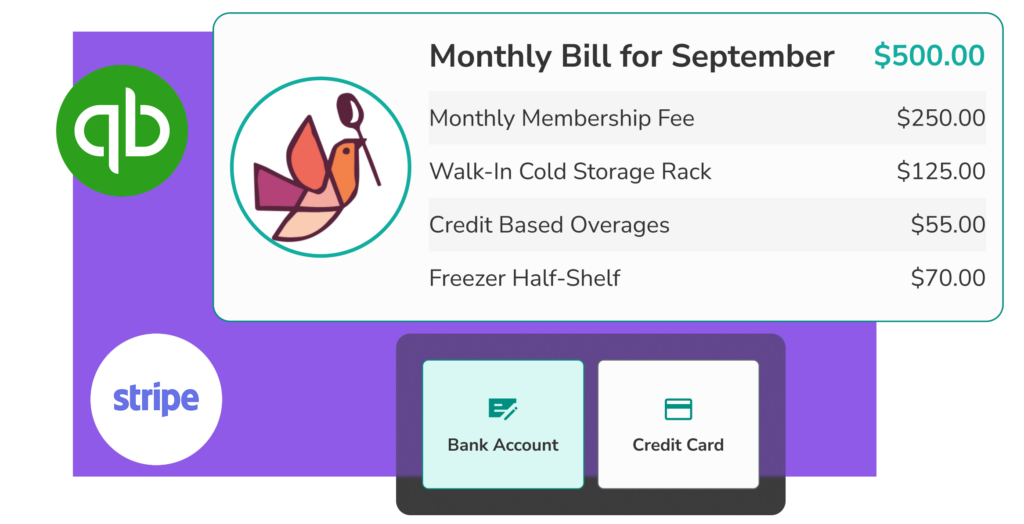
When we started The Food Corridor, one of the biggest pain points we heard from kitchen operators was collecting payments.
Operators were spending valuable time chasing invoices, following up with renters, and managing financial administration.
We purpose-built our software to automate booking-related billing and payment collection.
We wanted to help kitchens spend less time chasing money and more time making money.
And because payment processing comes with real costs, we designed our platform fees to support that service while offering options to help operators manage expenses.
How Our Platform Fees Work
Our standard platform fee is 4%, including payment processing.
On Professional and Annual plans, the fee is discounted to 2% for food businesses set to bank transfer (ACH/PAD) or manual payments such as cash or check.
On the Starter plan, the fee is 4% across all payment settings.
We’ve worked hard to keep these fees competitive within the specialized shared kitchen software industry, particularly considering the services and unlimited core operations they support.
For manual payments collected outside the platform, the discounted platform fee is charged to the kitchen on a rolling monthly basis once more than $5 in fees has accrued.
There are also small-transaction fees for certain card payments: an additional $0.30 on U.S. credit or debit card transactions under $30, and an additional $0.40 on Canadian credit card transactions under $40.
We believe transparency matters, including the details.
Your Kitchen. Your Pricing. Your Choice.
We also recognize that every kitchen has its own pricing strategy and business model.
That’s why we’ve built flexibility into how operators manage platform fees.
You can choose to internalize the fee, treating it as part of your cost of doing business and incorporating it into your rental rates, just as you would with utilities, insurance, equipment maintenance, or other operating expenses.
Or you can choose to externalize the fee, passing it along to renters as a transparent line item on their invoices.
And you can choose which supported payment methods you accept to help manage transaction costs.
Interestingly, about half of the kitchens on The Food Corridor absorb the platform fees themselves, while the other half pass them along to their food businesses.
There isn’t one right approach.
You decide. You control.
We believe operators should have the flexibility to manage their own economics, within applicable payment rules and regulations.
We’re Committed to Keeping Software Accessible
We also offer discounts for qualifying nonprofit kitchens and multi-location operators.
We provide a free first month on our Professional and Annual plans so kitchens can get started and experience the platform.
And we don’t require a long-term service contract. We simply ask for 30 days’ notice if you decide to deactivate your account, subject to any applicable annual billing commitment.
We know switching software is a big decision, and we want operators to feel confident in the value they’re receiving.
You can explore the details of our current plans and pricing at thefoodcorridor.com/pricing.
We’re Not the Right Fit for Every Kitchen. And That’s Okay.
Different kitchens have different operating models, budgets, and technology needs.
Some may need a simple calendar or scheduling tool. Others need comprehensive systems for onboarding, compliance, billing, payments, lead management, and growth.
We understand that.
Our goal has never been to convince every kitchen that we’re the only solution.
It’s to provide exceptional value to operators whose needs align with what we’ve built.
We encourage operators to compare solutions, ask questions, and consider the full cost and value of the technology they choose.
That includes subscription fees, processing costs, administrative time, support, growth opportunities, and the reliability of the service behind the software.
The least expensive tool isn’t always the most cost-effective solution.
And the most comprehensive platform isn’t necessarily the right fit for every operation.
What matters is finding a solution that supports your business and helps you accomplish your goals.
We’re Building for the Long Term, Together

Eleven years ago, a few brave kitchen operators believed in an idea.
They shared their challenges, gave us feedback, tested early versions of our software, and helped us build something that could serve a growing industry.
Today, more than 500 kitchens and 15,000 food entrepreneurs are part of that story.
And we’re still learning, improving, researching, and investing.
We’re proud to be an independent company. We’re proud of our team. We’re proud of the relationships we’ve built.
And we’re especially proud of the work our customers do every day to strengthen their local food economies.
Because ultimately, The Food Corridor was never just about building software.
It was about connecting resources, removing barriers, enabling entrepreneurship, and making local food systems more sustainable.
It’s about helping shared kitchens become more efficient, profitable, and impactful.
It’s about building an empowered network that can elevate an entire industry.
I’ve always said shared-use commercial kitchens are the heart of local food systems.
And if you’re a shared kitchen operator, you’re part of that heartbeat in your own community.
Our job is to help you do what you do best, with less friction, more opportunity, and the tools and support to keep growing.
That’s the mission we started with.
To enable efficiency, growth, and innovation in local food.
And eleven years later, it’s still what drives us every day.
Thank you for being part of this journey, for believing in what we’re building, and for helping create a stronger, more connected local food system.
— Ashley Colpaart, PhD
Founder & CEO, The Food Corridor